



Dugald Campbell McLachlan (1893-1958) was a founding member of the Camelon Pipe Band and its Pipe Major for two decades prior to the outbreak of the Second World War.
His father, Peter (1859-1913) was a piper who worked as a gamekeeper at Lochearnhead before taking a job at a chemical works in Falkirk. As well as Dugald, he had two other sons, Charles and Sandy. Shortly before Peter died, he encouraged Dugald, to form a pipe band in the nearby village of Camelon.
The band had been together for just over a year when, at 06:49 on May 22, 1915 at Quintinshill near Gretna, close to the border between Scotland and England, a troop train on its way from Larbert near Falkirk was derailed. Three trains were involved in the crash.

The young soldiers and officers of the 7th (Leith) Battalion, The Royal Scots, were en route to Liverpool to embark for Gallipoli. It was a volunteer battalion comprising young men from Leith although several were from the Falkirk district. The appalling loss of life was the worst in the history of British railways. The final toll was 227 killed and 246 injured. The Royal Scots had set out with 12 officers and 470 men. All that remained was seven officers and 57 men. Among the casualties were all the young pipers and drummers of the regiment’s territorial battalion.
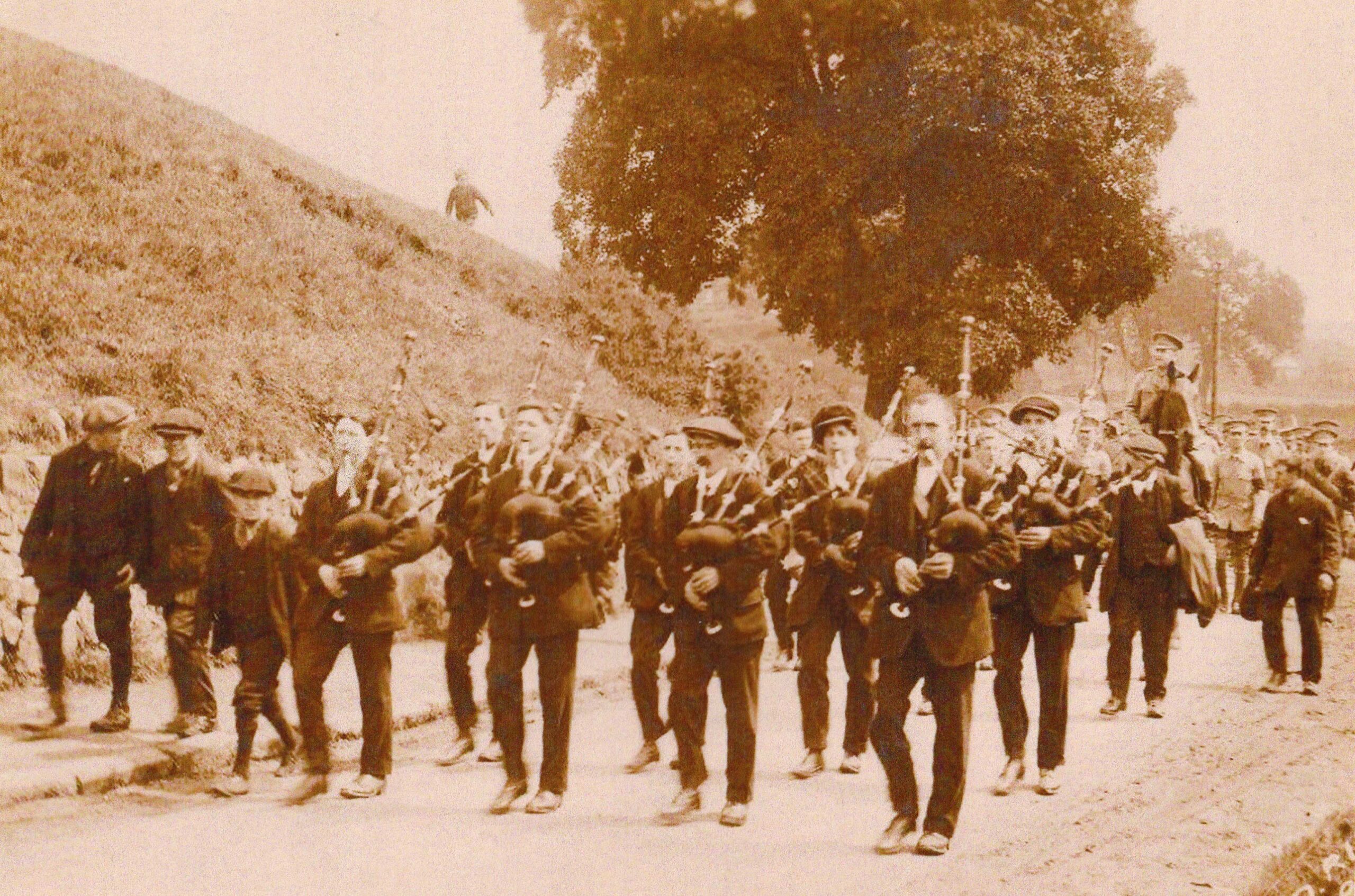
Dugald and almost all members of the Camelon band, including brothers Charles and Sandy, volunteered to replace the lost band. At the time, Dugald was 22 and possibly the British Army’s youngest Pipe Major.
The members of the band all saw action during the conflict, including Dugald who had a thumb blown off on the morning of Armistice Day. In a letter* to his mother, which we have reproduced at the end of this article, Charles gave an account of some of the action.

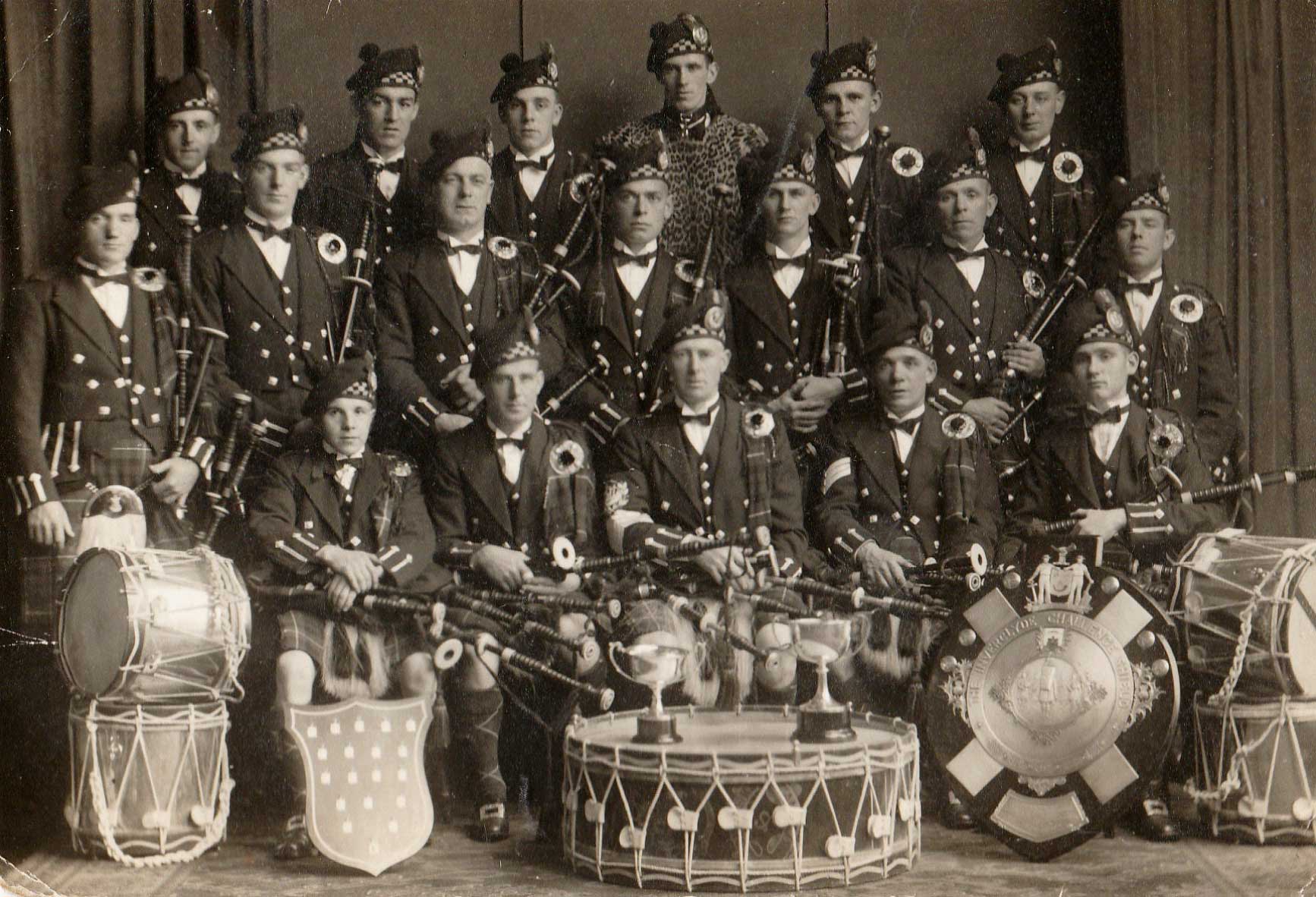
The band was reconstructed after the war, with some new players and young players recruited from local companies of the Boys’ Brigade added to the remnant that had survived from before the war. The trade depression made this more difficult as players had to leave the district to find work. The band went from strength to strength. It competed widely and regularly around the district and further afield, winning many competitions throughout the 1920s and 30s.
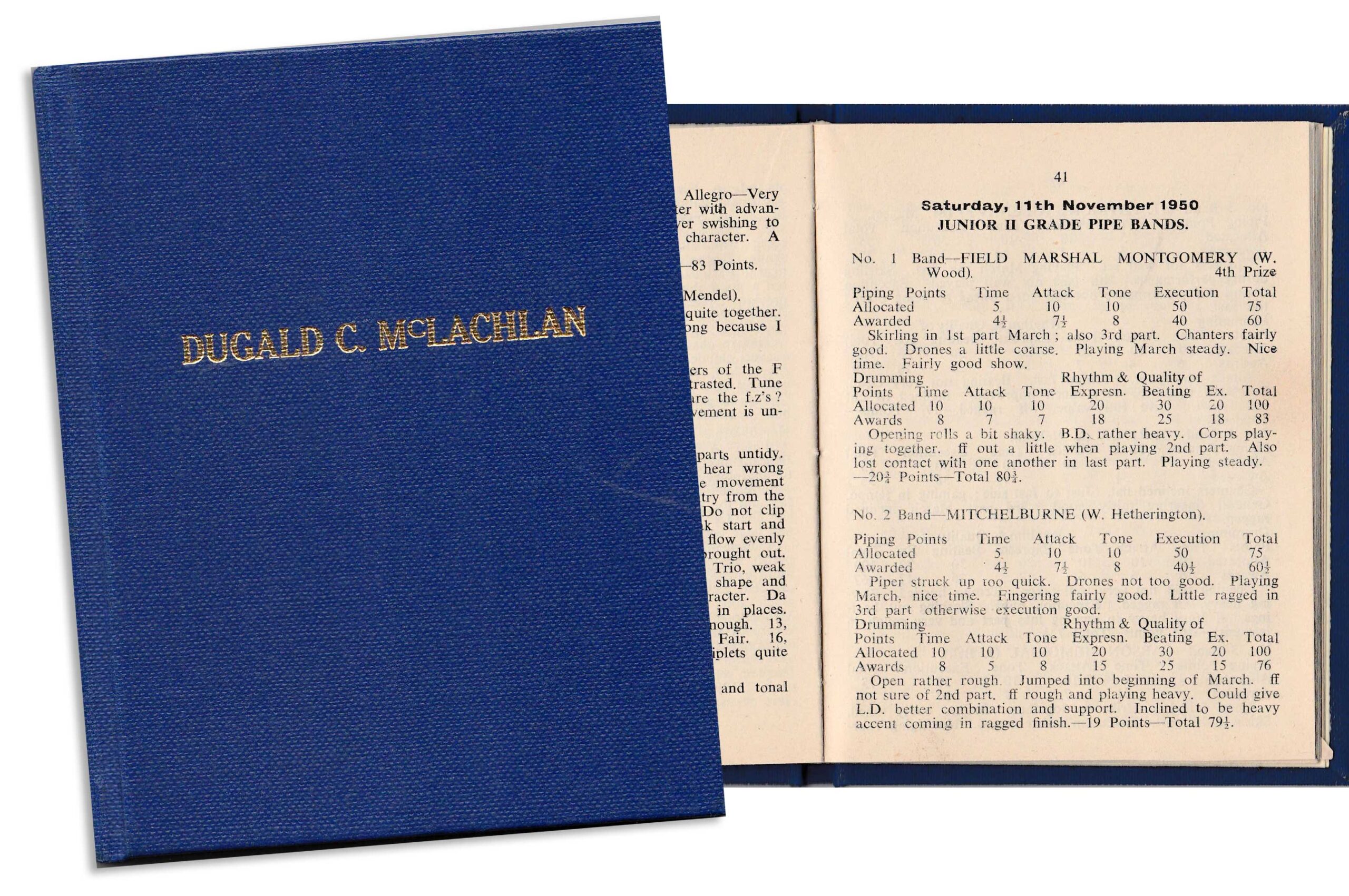
Dugald composed some nice tunes, the one above, composed for his daughter, being an example. One of his compositions, Jessie’s Welcome Home, was used as a test piece for a pipe band contest held in Belfast in, we think, 1950. Jessie was his daughter.
At the end of the 1939 season the band was promoted to Grade 2. However, the Second World War then broke out. During the war, the majority of the band’s members saw service abroad and after the conflict it took a couple of years to rebuild.
Dugald, who lived at 50 Mungalhead Road, Falkirk, resigned in 1947 due to health reasons and Pipe Major Hugh Wilson took over a band. By this time, the band was ranked as one of the best in Grade 2. In fact, it won the Worlds in 1950, gaining promotion to Grade 1 at the end of that season.
Dugald went to become a respected SPBA pipe band adjudicator. He also taught many youngsters in the Falkirk area and was the tutor of the 9th Falkirk Company BB. He died aged 65 in 1958.

The Camelon Pipe Band played at a Quintinshill memorial event held in Larbert in 1994 and again at an event held there in Larbert in May 2015 to mark the centenary of the disaster.
* Dugald’s brother, Charles wrote this letter to his mother in 1915. It is in the possession of Dugald’s descendants who have given us permission to reproduce it. We have reproduced it in its entirety:
April 10, 1915.
Dear Mother.
No words of mine could express to you my feeling of gratitude for the parcel you sent, which I received all right. All I can say is “Thank You” or, as they say in France, “Merci”. I had a splendid tea last night, and I hope to have another splendid tea tonight – of course I shared it out with my chums. They always do the same when they get anything and they all wish me to tell you that they enjoyed the cakes splendidly.
I expect you will be pleased to hear that I have got another job now that keeps me out of the fighting line. We have five pipers now, and when the Battalion goes into the trenches we go back and join the Transport, of course we are not out of range of the shells but still our chance of getting hit is much less, and anybody who can serve seven months of this War deserves an easy job. We had over 20 pipers when we came out here, and five is all that are left, so they are trying to preserve us as long as they can.
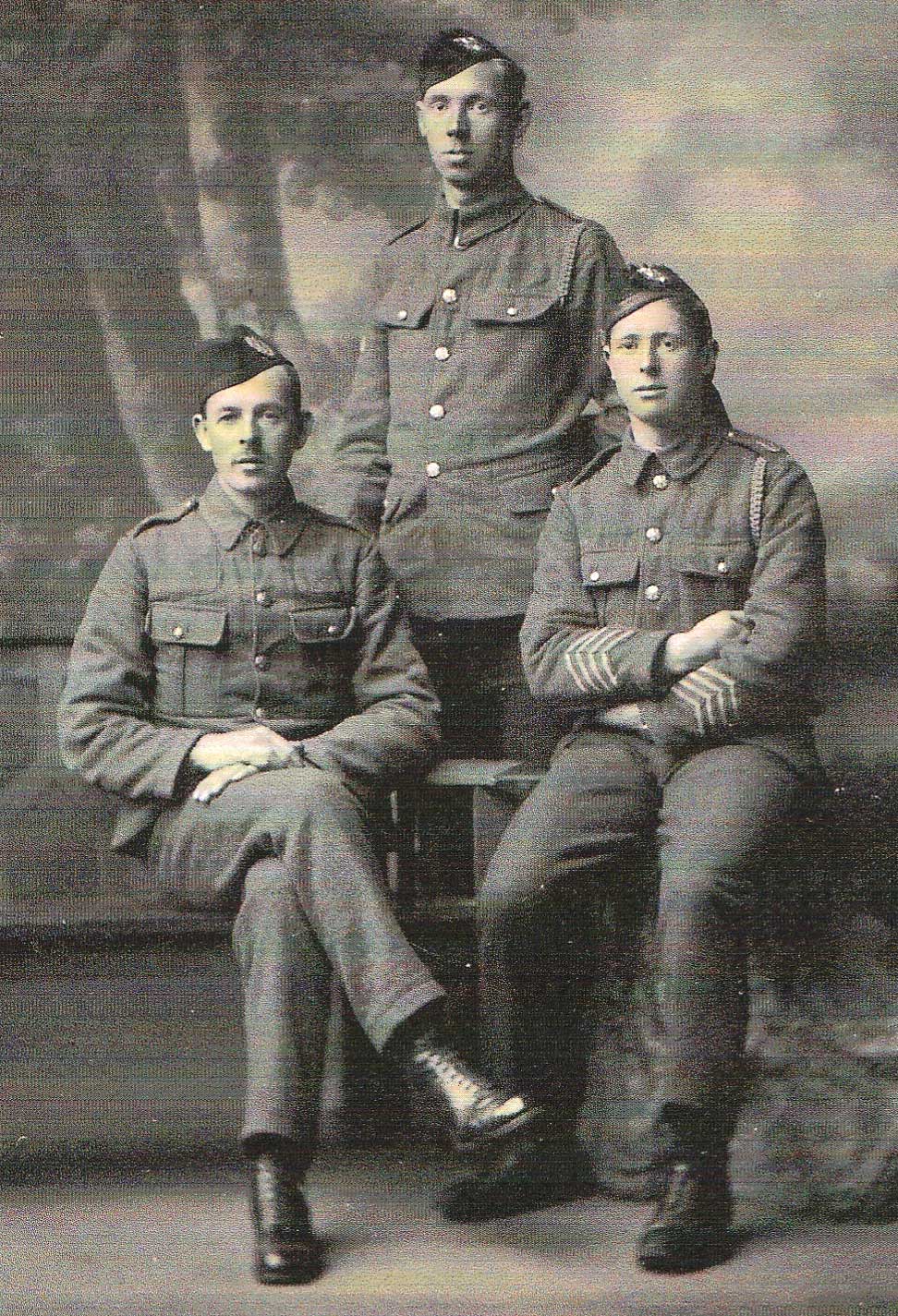
They took the pipes from us at the start of the War and put us into the ranks, the same as the remainder with Rifle and Ammunition, and sent the pipes home as every man was needed in the firing line, but they have sent for the pipes again and I am going back to my old job, blowing for all I am worth. I have asked a chap who takes in the letters if he could slip in this letter without anyone seeing it, so he says he will try, and if he can’t I’ll get it back and tear it up, so I will be able to tell you a little more than usual.
The Battalion is at present holding the ground against … [indecipherable] … at Neuve Chapelle. We were not in that big fight. We were just to the right of … [indecipherable] … where the fight took place, and in front of our trenches was all marsh, so we couldn’t advance, and we are still in the same place yet, but I hear we are going back for a rest in other eight days time. Our Battalion is pretty strong just now – they number about 1,000. We were all in the fighting at La Bassee. I spent the New Year there in trenches, up to our waist in water. We made an attack there and chased the Germans out of Guinchey Village two days before Christmas. We had 205 casualties. My chum from Ormiston was killed there and buried within an hour. We see some horrible sights here but we get used to it. One day at Ypres our D Company got heavily shelled and some coal boxes went into their trench killing about 20, so I was sent along with a few others to dig them out and bury then. I shall never forget that sight, we got ten bodies out and buried them all in one grave. The grave was not deep enough so we had to heap the earth up on them so that they would be covered. Andrew McKenzie finom Grahamston was one of them. We wouldn’t take out the other bodies, they were so much out up, so we just filled up the holes made by the shells with the bodies inside. I was digging there and came across a man’s foot so I started to try and dig him out. I gave his foot a hard pull to try to ease it a bit when the leg came away in my hand, his body was completely shattered. Hundreds were killed there, and their names were never found. You will see in the papers every night names of men who are missing, well the majority of these are men who get killed and are let there and are buried either by civilians or Germans, and nobody knows here what happened to them so they are reported missing.
I have been taken prisoner twice out here, but I must say l have been very lucky. The first time l was taken was at Landmark near Ypres, about 30 of us were taken holding a house. We got surrounded and had to give in. The French Artillery started to shell this house so we and the German guards had to take refuge in a cellar below the house. They meant to stay there until dark and then take us away, but when it came dark our regiment with the Queen’s Regiment charged and captured the portion back again, along with this house and over 200 prisoners, so we marched the Germans back instead and I was free once again – that was the day of the great battle ‘Ypres’.
The next time I was taken in the trenches of Ypres. The Germans attacked us with daybreak in the morning. Our regiment was holding them ‘in front of us, but the Black Watch and the Scots Guards on our right fell back, so the Germans got through and came down at the back of us, so we couldn’t hold them in front and them at the back. Our Battalion got wiped out except 120. I was in a trench and I was so busy firing at them in front that I didn’t know anything about them behind until the man beside me shouted and it was too late, then the Germans were going along the trench shooting every body inside. I put down my rifle to surrender when a German came over to within five yards of me and fired two whole shots at me and ran away. How he managed to miss I don’t know, but he must have been confident he hit me as he never troubled to come inside the trench and see. Of course there were hundreds of Germans round about so I lay down in the trench and kept quiet. After a while, a German officer and a party came along the trench and got me here. He put two men in beside me and I was a prisoner once more. By this time our artillery got their guns on the Germans, and I must say that not a German who passed our trenches got back again. They were simply mown down. They were the best troops the Germans had and the finest body of men I ever saw, not one of them under six feet. The fire was so hot that we couldn’t leave the trench, and I was led there all day under the charge of two Germans. The men who charged us were the Kaiser’s Body Guards, the Prussian Guards. They took everything I had and ate all the food I had, and inside was my teeth as I had a sore mouth at the time and couldn’t use them.

Our shells were still coming over when it got dark, so the two in charge of me were beginning to wonder how they were to get away without getting hit, so when darkness came on, the shelling got a bit slacker, so they decided to make a run for it, and made signs for me to follow them, but I had decided to make a run for it but in the other direction so when they ran so did I, and of course they lost me in the dark, so here I was all alone, but I had a good idea where Headquarters were, so I thought I would make for there, a farm about three miles away.
It was pouring rain and l was wet through, but the excitement make me forget this, and I could hear Germans moving about. Dead and wounded were everywhere, so I had to crawl on my hands and knees through ploughed fields and I came across two of our chaps wounded but able to walk so I told them to follow me and I would try and get them in, so on we went but we didn’t get far when we heard a noise and lay down flat, but it was no good. Two Germans on patrol came over and looked at us. I stood up and when they saw who we were they ran for their lives. They must have, thought there were a lot of us, so our luck was in again, and we went on in case they would come back. We got in near our own lines and our chaps were firing at the least movement in the dark, so I hit on a plan. We lay down and I started shouting “Help!” as if I was wounded, so a party of Worcester Regiment came out to help us in, so the two wounded went to hospital and I rejoined what was left of my regiment, and what at sight: 120 men let out of 7,000 and one Officer. Of course we had many an adventure, but it would take weeks for me to tell you them.
The next thing is to get the letter in without the Officer seeing it.
What do you mean when you say there has been a lot of rumours going about? I hope you are all well at home, as I am at present, as I feel splendid now, though I must admit I did feel a bit bad for a while, but not bad enough to see the Doctor. A bullet hit me on the side about two months ago, but I didn’t go to the Doctor with that either as it only took about an inch of skin off, so I put a bandage on myself and healed it up alright. Only left me another mark to carry about. There is no use writing and telling you all my little complaints, it would do me no good and you no good either.
I expect it is the Old Boot’s son whose death is in the paper.
I had a letter from Edinburgh two days ago telling me that Kinnear was in Edinburgh sometime ago and was telling the people there that all the pipers were killed except Cruickshanks. I would like to know where he got his information – perhaps that is the news you heard. If you had told me the rumours you had heard perhaps I could have enlightened you.
I am glad to hear that Jessie is back again to her work. I hope he rhands are all right again, and that she enjoyed her holiday in Fife.
I started to write this letter yesterday, and it is Sunday afternoon now, and it is a splendid day for a walk through Bonnyhill [near Falkirk].
This is all your writing paper back again, but I have plenty of paper and envelopes now.
I must stop now and you can rest assured that l am alright and in the best of health and good spirits. Hoping you are all the same once more.
Thanking you for the parcel.
I remain,
Your loving Son,
Charles.