


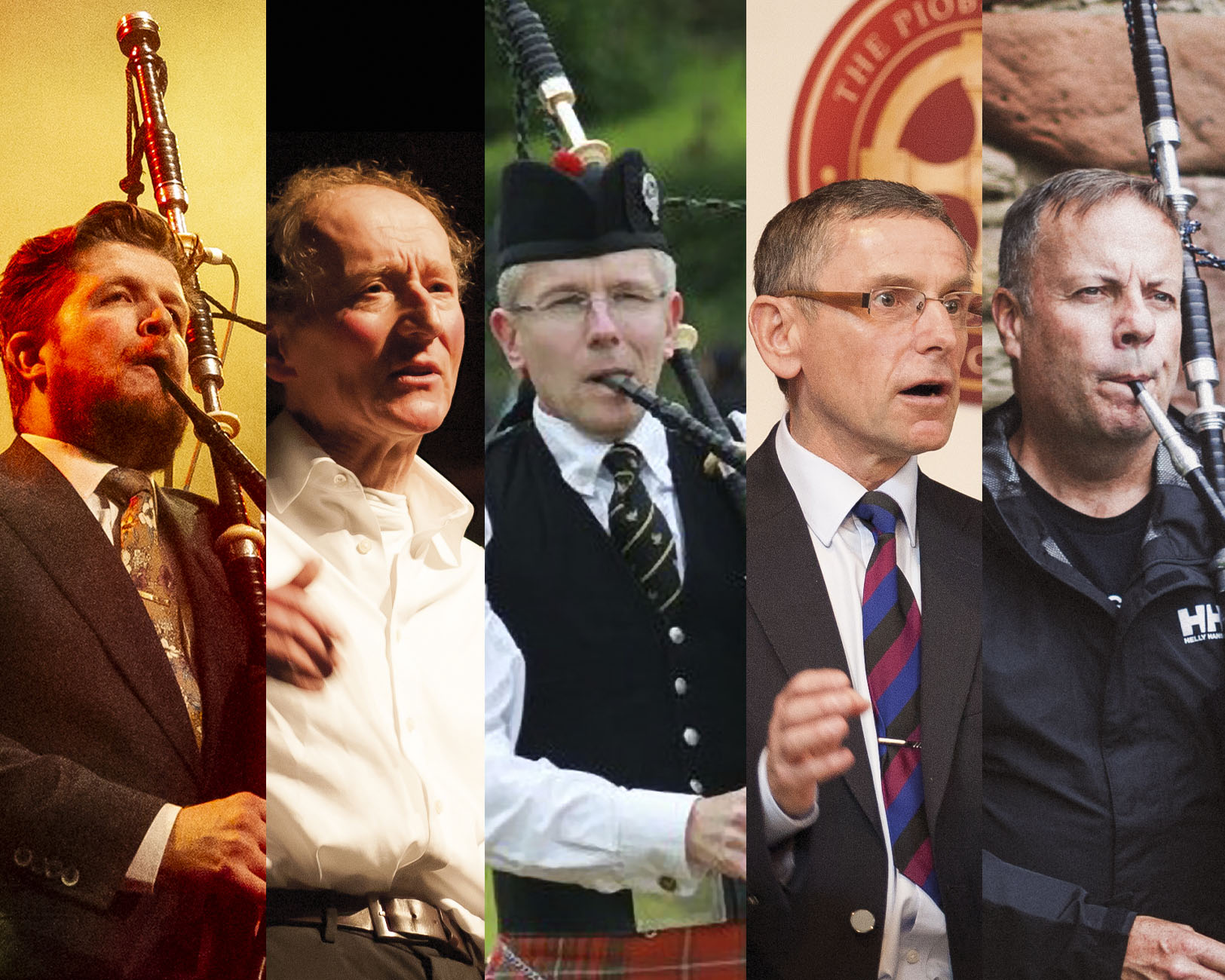
The 2026 Annual Conference will be held in the Golden Lion Hotel, Stirling, next weekend of March 27 – 29. The previous venue, the Royal George Hotel in Perth, has closed temporarily after a fire. The switch to The Golden Lion has been a smooth transfer and bookings can be made through the Piobaireachd Society page here.
The itinerary for Saturday 28 is varied and features four fascinating talks that span the origins, personalities, future direction, and institutional history of the music:
Talk 1: 9.30 – 10.15am: ‘The Origins of Piobaireachd’ – Hugh Cheape, Peter McCalister
Talk 2: 10.45 – 11.30am: ‘The Life and Music of Bill Livingstone’ – Michael Grey
Talk 3: 1.30 – 2.15pm: ‘Let Piobaireachd Flourish’ – John Mulhearn
Talk 4: 2.45 – 3.30pm: ‘100 Years of the Piobaireachd Society Collection’ – Jack Taylor, John Frater

A piobaireachd ceilidh will follow at 4-6pm with our black tie dinner 7 for 7.30pm. Three young champion pipers will entertain us after dinner.
Friday night stays include bed and breakfast. Two night stays include B&B x 2 plus Sat dinner. All bookings, one night, two nights, day visits, include Saturday lunch and tea and coffee. For those travelling, we will meet circa. 6pm in the hotel on the Friday evening, and members are welcome to join General and Music Committee members for a relaxed meal in the Golden Lion (Costs not included in fees below.)
Participants depart after breakfast on the Sunday. Check out the rooms and facilities at the hotel here. NB: Friday night stays do not include Sat evening dinner. This can be purchased separately for those staying on. The Conference is open to non-members.
- Anyone with any queries should email Hon. Sec. Ben Duncan on secretary@piobaireachd.co.uk.
Piping Times Editorial from March 2001
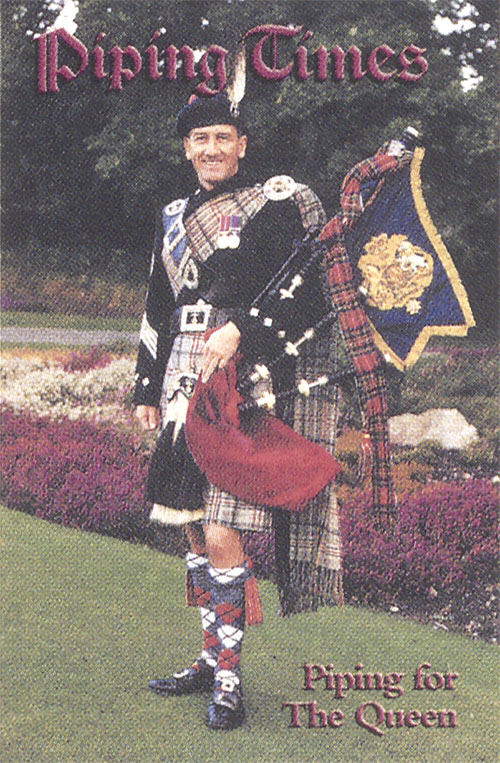
We looked back 25 years for reports on the Piobaireachd Society Conference and found this editorial in the Piping Times, which was lighting a fire under the publishers of the MacArthur Manuscript and urging them to get it completed and published – which it was, just five months later in July 2001.
Officials of the John MacFadyen Trust should not be surprised if they suffer a bit of ear-bashing at the Stirling Castle lecture later this month. Frustration over delays in the publication of the MacArthur Manuscript is mounting and the natives are becoming decidedly restless.
It is now some 15 years, yes 15 years, since the music (the dots and tails), was first transcribed from the original, and almost eight years since an article in the West Highland Free Press urged some haste with publication.
It contrasted the energy and drive of the eponymous Mr MacFadyen with the apparent tardiness of his Trust. Twelve months ago we were assured the book would be ready for last year’s Piobaireachd Society conference; then it was to be presented at the Donald MacDonald Quaich in June 2000. Now? Well, we understand printing is imminent, but that’s what they said a year ago.
Nevertheless, we shouldn’t be too hard on the Trust. They do important work for piping. Their error has been in deciding that the MacArthur collection should appear with a detailed theoretical analysis of the manuscript. It will run to many pages. It will be read by a minority and hike the cost of the book beyond the reach of the majority. The tunes should have been done separately with this level of analysis following on. The upshot will be a much reduced sale. When, and if, the tunes are set for the main competitions, photocopiers will be doing overtime.
It shows what can happen when we give too much scope to the new elite in piping: the pibrochologist.
A divide is developing which is unhealthy. Pipers, the simple folk who study and memorise and play the music, are becoming increasingly sceptical of the work of these academics. Does it help one iota in getting to the soul of the music? Is there any point in knowing the square root of a jam jar if you don’t know how to remove the lid? Both these points are being heard with increasing regularity when pipers foregather.
We believe they have a point. We fear some of our researchers are in danger of losing touch with reality, intent on impressing their peers more than anything else, or, to put it another way, wired to the moon instead of the practice chanter.
Now, it is an incontrovertible truth that there is a place for the piobaireachd scholar. Witness the outstanding work done on the 1994 edition of Joseph MacDonald.
We can think of none of the current crop of top players who would have had the time, inclination or perhaps the ability, to do this work.
No, it is not an analytical, mathematical, approach to the music which primarily concerns us about the boys from academe. It is the seemingly derogatory attitude towards professional pipers, prevalent among some of the scholar class, that goes along with it.
It is an attitude neatly summed up in the description ‘performer community’ so prevalent in Mr Donaldson’s recent tome.
MacArthur too, we are told, will have its own, ‘performer’ text.
Let us be positive however. Whilst we doubt whether Angus MacArthur, Angus MacKay, Donald MacDonald or any of the other early sources would have a clue as to what the boffins are rabbiting on about, we do think continued research is important.
Just let’s get it into perspective and remember who the really important people are in the piping world. And don’t forget to get your oar in at Stirling. None of us can afford to wait another 15 years.
The MacArthur-MacGregor Manuscript is now available to purchase as a digital download from the Piobaireachd Society here.