

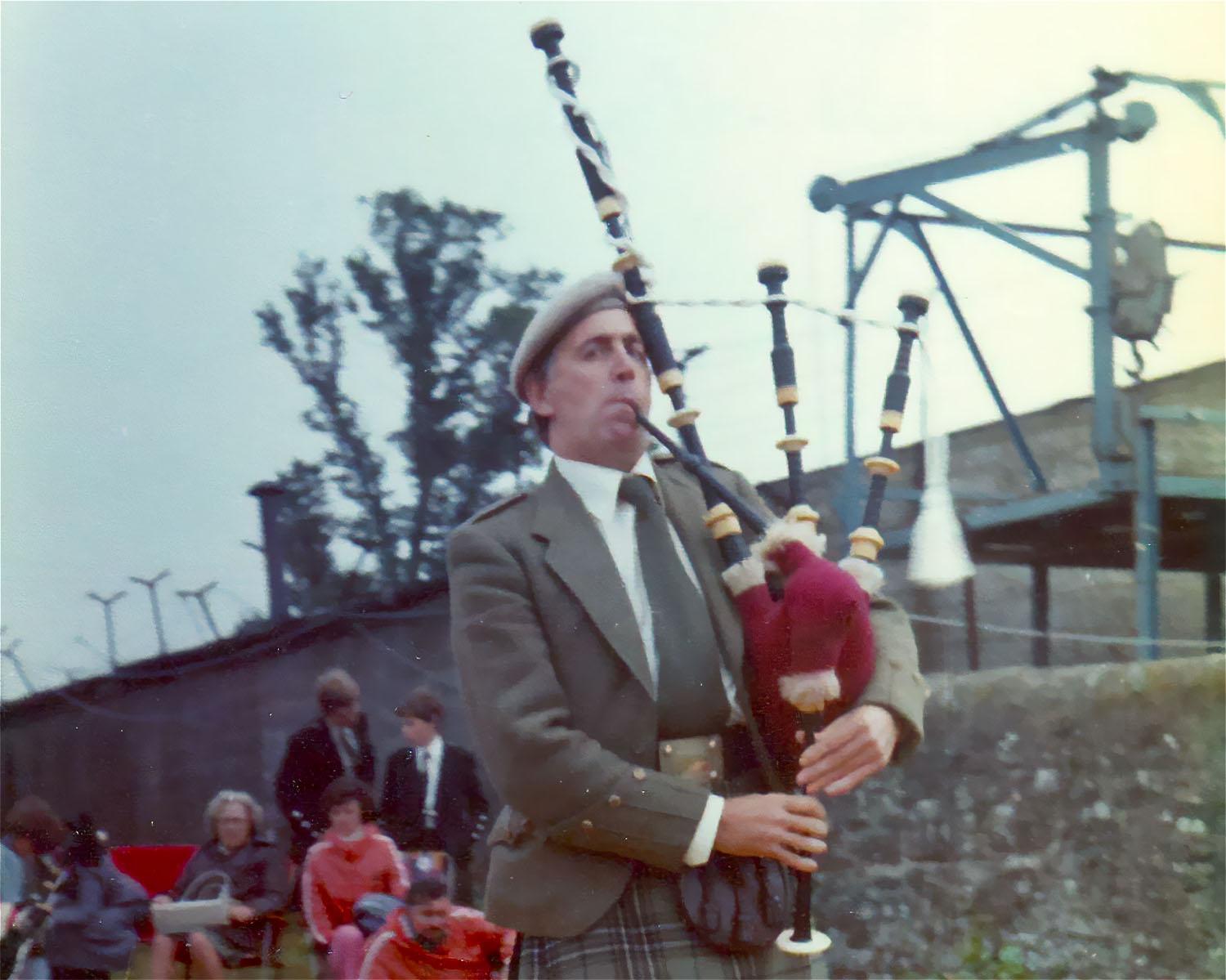
Kenneth MacLean, a highly respected piper and a pillar of the College of Piping, died on April 4, 2026, at the age of 93. Born in Glasgow on November 30, 1932, MacLean began his piping life in the Boys’ Brigade 116 Company in Anniesland after being told there were no places left for drummers.
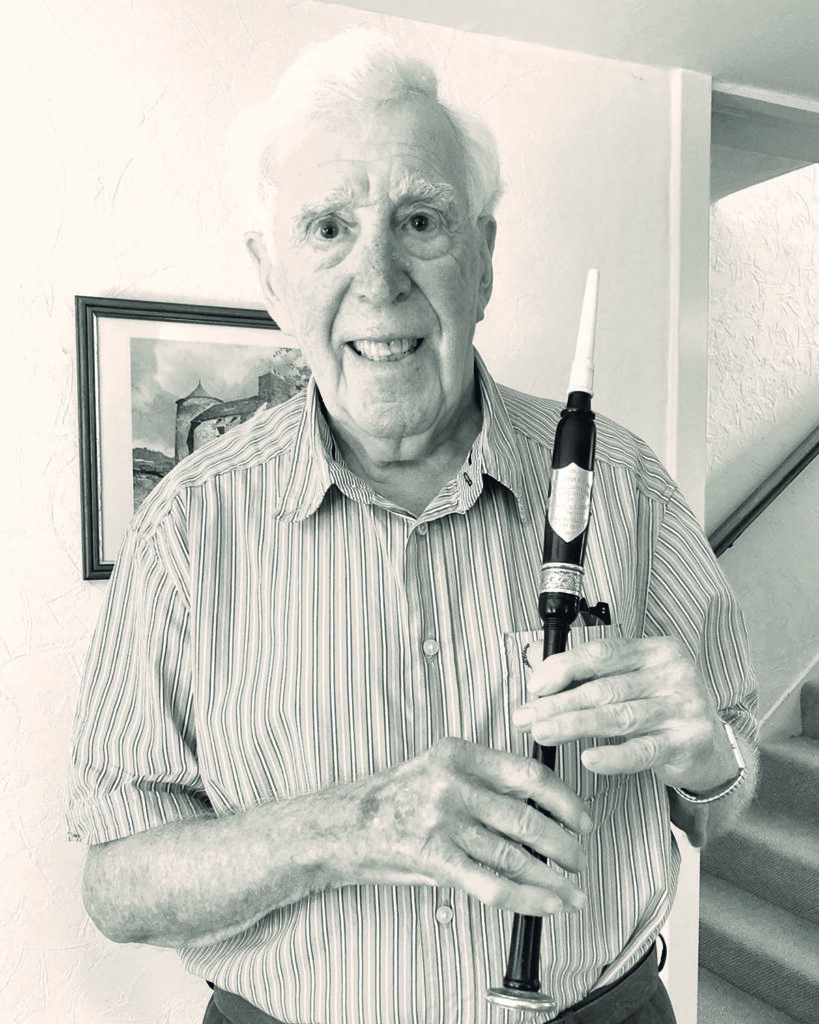
At 14 he became one of the College of Piping’s earliest pupils, walking through the door in Pitt Street in 1944 with a second-hand practice chanter bought from Peter Henderson’s shop. There he received his first formal lessons from Tommy Pearston and Seumas MacNeill, later studying with Pipe Major Donald MacLeod MBE, whose house he visited regularly for tuition. MacLean always spoke warmly of these mentors, recalling Donald MacLeod’s extraordinary ear training and the College’s ethos of generosity: fees were waived for those who could not pay, and the place became a second home for generations of young players.
Kenny’s unbroken association with the College of Piping lasted longer than any other individual’s. He began teaching there while still a young man and continued for fifty years, never accepting a penny for his services. Known affectionately as the “Professor of Difficult Piobaireachds,” he guided thousands of students from around the world, including summer schools in Scotland and Canada. His Thursday evening classes became legendary: after lessons, chanter cases were set aside, a bottle appeared, and pupils and tutors sat around the big table swapping tunes and stories. Former pupils remember his patient, musical approach and his insistence that piping was about more than competition — it was about understanding the music. He also taught at Glasgow’s leading schools and later in Ayrshire, but the College remained his spiritual home.

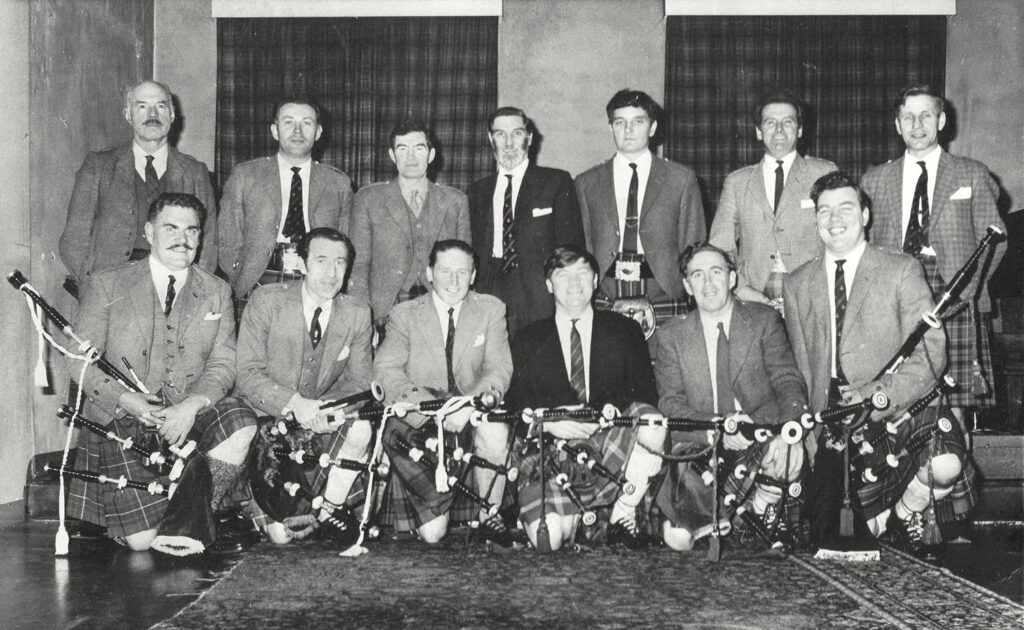
His competitive highlight came in 1974 when he won the Gold Medal at the Argyllshire Gathering in Oban with a flawless rendering of Battle of Bealach nam Bròg. MacLean later recounted the moment with characteristic modesty: midway through the doubling of the crunluath he heard a sharp “pop” and feared a drone had stopped, yet he finished the tune. Only afterwards, when the telephone rang at home to tell him he had won, did he discover the sound had been in his own ear. The victory, judged by fellow competitors including John Wilson of Canada, crowned a lifetime devoted to the highest standards of ceòl mòr. A former Clan MacLean piper, a lifelong nationalist, and a man who gave far more than he ever received, Kenneth MacLean leaves a legacy measured not only in medals but in the countless pipers he taught to listen, to think, and to love the music.
The Piping Times of Kenny Maclean
The Piping Times Editor, Stuart Letford, interviewed Kenny MacLean in 2021 and we have included it below to give further insight into Kenny’s lifetime of piping.
Stuart Letford: You’re looking great, Kenny. You’re 88 years old, I believe? Let’s start at the beginning. Where were you born?
Kenneth MacLean: Yes, I’m almost 89. I was born in Glasgow on November 30, 1932. At home.
SL: What school did you go to?
KM: I went to Knightswood Junior School then I went to school in Hyndland. Seumas [MacNeill] went to Hyndland. Dugald [MacNeill] went to Hyndland. We went to the same school but at different stages.
SL: I learned to play first of all through the Boys’ Brigade (BB). I believe you did, too?
KM: Yes, the BB. That was the starting point. This was 116 Company in Anniesland.
SL: What made you want to play the pipes?
KM: I didn’t. I wanted to become a drummer but they didn’t have any places left. They said to me, “What about playing the pipes?” so I went to Peter Henderson’s shop in the centre of town with 12s 6d in my pocket to buy a practice chanter from Archie McPhedran. He was an awfully nice man. He lost his legs later; they were amputated due to diabetes. Albert Sheath worked there at the time. This is where the famous ivory set of pipes for the Prince of Wales hung on the wall. The shop, like a lot of others shops, had its own distinctive smell. The public library at Knightswood Cross had its own smell, too. I’ll never forget the smell of that, in fact. It was the smell of books. I used that library extensively. I was a great reader.
Anyway, I didn’t have enough money for the chanter. I had saved up money from my paper round, a shilling a week or something, but Archie said, “That’ll be 15 shillings.” My face fell. I said, “I’m terribly sorry, I’ve only got 12s 6d.” He said, “Hold on a minute,” and went away through the back shop and came back with a chanter that had a flat side at the top, there wasn’t enough wood on it to be turned right round. It was a reject but it was a perfectly good chanter. The flat bit made no difference to the sound. So away I went with it.
My big problem was that in my keenness to learn I practiced mistakes! The teaching in the BB at that time wasn’t that good. They gave you the Logan’s book and told you to get on with it. However, after a wee while, the mother of a friend of mine from my class in school, Ian MacDonald, saw an advert in the Oban Times. It had been placed by the College of Piping in Pitt Street. So I went along and Tommy Pearston asked me if I could play. I replied, “Yes!” and off I went with Scotland the Brave. “Well,” said Tommy, “let’s start at the scale!” I was 14-years-old.
SL: You were one of the College’s earliest pupils.
KM: Yes, I’m actually the person who had the longest uninterrupted association with the College. Dugald MacNeill had two years where he was away doing his National Service whereas my association was unbroken. I first went in 1944 and my lessons were turnabout with Tommy and Seumas. We had a book where they’d mark our progress every week – “Good progress” and “Shows promise”, that type of thing – and we’d take the book home with us.
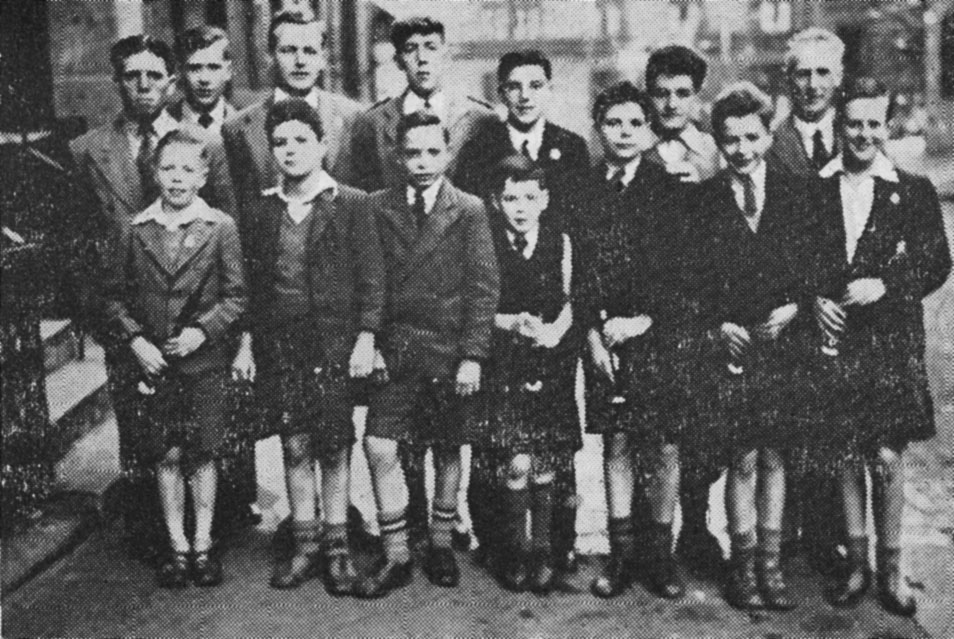
SL: People will be aware of the College’s origins in Pitt Street but very few people know what the building was actually like.
KM: I should really draw you a map of the building. There was one main room that you went in to. I remember the McCuaig family. Lester [McCuaig] was a good player. He used to come in on a cold winter’s night and set up a fire. By the time we went in the smoke was everywhere! There was a big basin of hot water where you dipped your hands to warm up and thaw from the freezing cold outside. There was a room at the back where one of the McCuaigs, who was a signwriter, had produced a large wooden sign with the whole ground of MacFarlane’s Gathering (Togail nam Bò) painted on it. I don’t know what ever happened to that sign. It was a work of art.
We had teachers like David Smith, a blacksmith who later had a smiddy in Drymen, and he made ceremonial swords and he sold them. Because of the ethos of the place, if some people had no money to pay the fees, the College waived the fees. They never took money from people who couldn’t afford it.
SL: Am I correct in saying you were one of the students that, in 1953, went to Brittany to play at a festival?
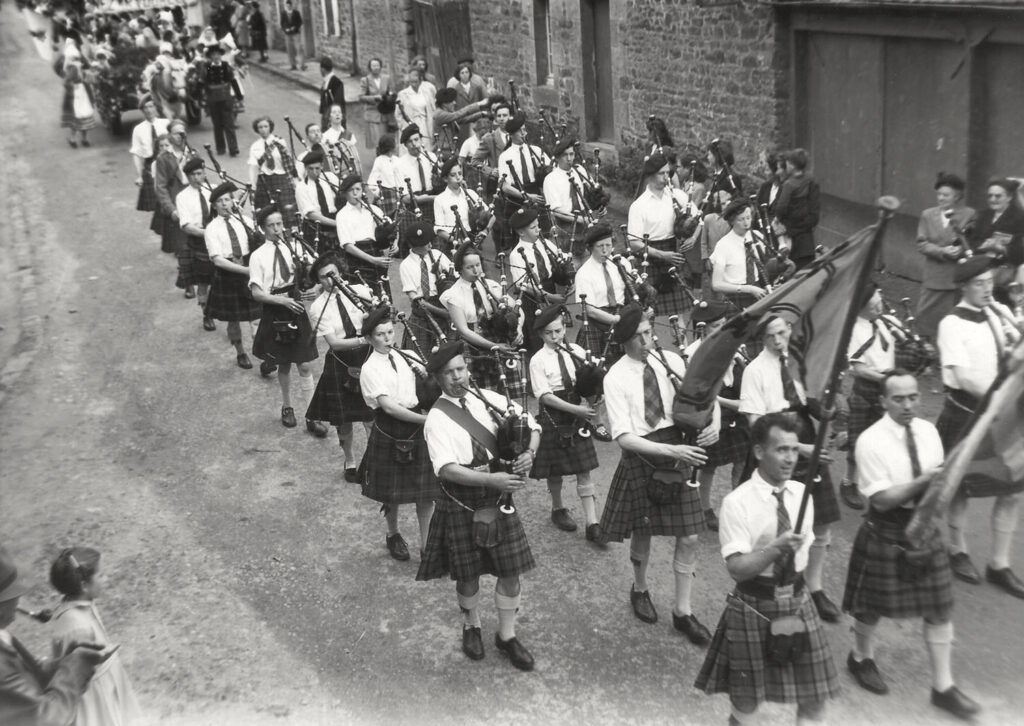
KM: Yes, there was Finlay MacNeill, John MacAskill, Bobby MacLeod, Ronnie Malcolm, Pat Leonard, Scott Bennett, Dugald MacNeill, myself, the Carmichaels, the McCuaigs … a whole crowd of good, young players, all teenagers; about 33 of us and three drummers. We were invited to go by the Brittany bagpipe association and were there for ten days, going from town to town and putting on shows. We met Polig Monjarret and his wife, a beautiful singer. I remember a chap from Dublin, some Welsh harpists and singers … it was really a forerunner of the Lorient festival only it moved around. We were, of course, exposed to this wonderful music, the binioù and so on. It was magnificent. Some of us went to Brittany a few years before that, though.
SL: Really?
KM: Yes, in 1949. Jimmy Wilson, Ronnie Malcolm, myself and another two who later went Australia, were invited to play at a festival. In those days we didn’t have money – no one had money – but the person who lived opposite us was the Head Foreman Joiner at Fairfields, the shipyards in Govan. He got in touch with Ralston’s of Milngavie, the big removal people who ran a Glasgow-London service, and arranged for me to get a lift to London on one of the company’s lorries.
I went to India Tyres at Inchinnan and one of the drivers was told to take me to London. We had an overnight stop at Penrith (I slept in sleeping bag under a bush; it was July so it was fine). Off we went the next morning and he dropped me off in London. I gave him a couple of pounds and some cigarettes. I then hitch hiked to Canterbury. A guy in a Rolls Royce gave me a lift. Then I got another lift to Dover where I stayed in the youth hostel overnight and crossed the Channel the following day.
I was last off the boat. I disembarked and a taxi drew up beside me. I said to the guy I was hitch hiking and had no money for a taxi. He wouldn’t have it, “No, no,” he said, “You come in.” I was wearing my kilt, you see, and the guy insisted on taking me to the centre of town. Remember, this was only a few years after the end of the war. I got lifts from there to Amiens then Paris where I arrived on July 14… Bastille Day! It. Was. Jumping! A guy took me into a beautiful big bar and bought me a beer and another guy in there said I could stay at his house. Next morning I hitch hiked to Versaille then eventually onto Brittany and to an agricultural college near Quimper, where all the entertainers were, Basques, Bretons, Irish, Scots… I arrived as they were all having lunch. I could hear it was noisy. I opened the door. I was standing there in my kilt and the place went deadly silent for a few seconds then erupted! The place went daft. I’ll never forget it. I was there for the best part of three or four weeks. I was 16 at the time and it was my first time abroad. I loved it. I soon learned to speak French quite fluently. The Bretons are great people.
The other four guys were travelling by train and boat. I left on the Monday to hitch hike. They left the following Friday, got to Southampton, missed the boat and had to wait another four days for the next boat. By that time, I was already ensconced with the people at the Interceltic festival.
SL: Fascinating. And by that time the College had moved to premises above the Red Hackle offices in Otago Street, thanks to Charles Hepburn. What point did you start teaching at the College?
KM: Well, I can’t really recall… I was hearing all the best players at the College. For example, Donald MacLean from Lewis used to come in quite regularly. Wee Donald MacLean (of Donald MacLean’s Farewell to Oban fame), too. He went to Tasmania. Married a dancer from the show, Brigadoon. He lived in Otago Street. His father was railway engine driver so he had a good job. He employed Donald to do nothing but play his pipes. He gave him an allowance, his digs, everything. When he came in from his shift on the railway Donald had to play his pipes for him.
Donald had a dreadful squint, a terrible squint. You didn’t know which way he was looking. He had a lovely rounded style of playing. He could play for half an hour, two-part strathspeys and reels one after another and not repeating a tune. One of the things he used to do was seat us in a single file and he’d play up and down the scale then play one note and ask one of us what the note was. The lad at the back of the file would answer and if got it correct he moved to the seat in front of him. It focussed our ears and the ones who got it wrong would be left at the back.
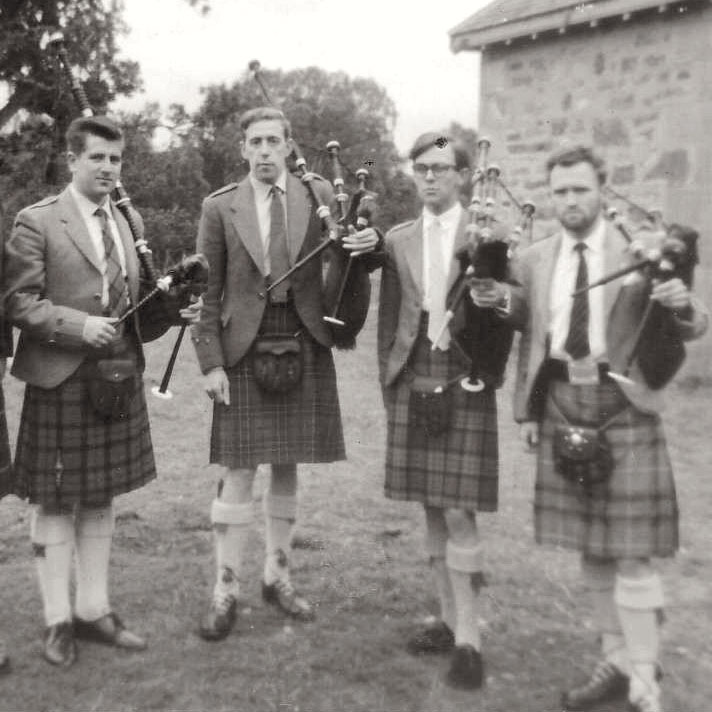
I gave Norman MacLean [the famous Scottish comedian and piper] his first lessons. He came down with his parents. I remember them well. There was another family called the Carmichaels. You see, in those days, the students’ parents were all involved with the College and supported it as a group. We used to have dances in an army place in Shakespeare Street in Maryhill. A ceilidh band would play, of course, but all the College pupils would play during the evening, too. All the parents were there; the Bennetts, the MacRaes, the Carmichaels … everyone supported the College in any way they could.
The College did so much for me as a boy. It brought me on. All the people there were dyed-in-the-wool Scottish nationalists – it’s how the college started – and they were all for climbing, canoeing, walking… we had some great nights with all these different people from all sorts of backgrounds. They taught me so much. I remember a Hector MacKenzie who was a school head teacher. A wonderful man. He encouraged me no end. The College was a place where people wanted you to succeed in all aspects not just with your piping. They gave me so much. Then, when I started teaching there, I ended up doing it for 50 years without taking a penny.
SL: You also taught summer schools in Scotland and in Canada. Were you ever a student on one of the summer schools?
KM: No, I was never at a summer school as a pupil. It was too early days. The summer schools came later. Kincraig, Skye, Canada, Tokyo. And I taught on them. It was good experience.
By now I was working as a draughtsman at Fairfields shipyard in Govan. That’s where I met Alice, who became my wife. She was a tracer. I remember the first time Seumas asked me go with him to the school in Canada. I was 18, though, and had just been called up for National Service. At the medical they found I had pleural plaques on my lung. They thought it was TB [tuberculosis] and failed me. I was disappointed, as I wanted to go into the Scots Guards. I was desperate to go into the Scots Guards and play in its pipes and drums. I decided to emigrate to Canada and set up a new life so I went to the Canadian Embassy but they failed me… for the same thing, too.
Anyway, at this time I went out to the Gaelic College on Cape Breton with Seumas and James L. MacKenzie (a champion Highland dancer). Our job was to train 100 pipers to be ready to pipe at the official opening ceremony of the Canso Causeway linking Cape Breton with Nova Scotia. The students were mostly girls, by the way. That was my first experience of a summer school.
SL: Did you ever do the ‘penny and a pibroch’ thing?
KM: Yes, I did that. The last time I did it was in 1986 when I was the guest player at Dunvegan for the Silver Chanter. It was a nice day. I played the pibroch and reported back.
SL: Did you ever go round the games circuit much?
KM: No, I never had time. I was too busy running a business. After Fairfields I worked as a contract engineer building the nuclear station at Hunterston. I met a lot of other engineering company representatives who wanted to be sub-contractors and so on. They always took me out to lunch. They all had nice cars and their expense accounts and seemed to be doing very well. I wanted to do that. A job came up with a company in Glasgow whose business was selling duplicating equipment and systems for engineering companies in order to make them more efficient. I spent my first couple of years doing that. We were tied to a German company that made the machines. We were a sub-agent. It was a franchise. The main agent then went to head up the London side of the business and I replaced him for the Scotland side. I put systems into a lot of major companies here.
However, one of my colleagues was doing the dirty on the company in Germany so, fearing for our livelihoods, four of us flew to Berlin to speak to them and we told them we’d like to take on the franchise ourselves. They agreed so we set about raising the money to start up the business. I sold the house in Barrhead and bought a flat on Great Western Road [Glasgow]. The business took off. In the first year we did very well.
I used to go down to Kelvinside Academy and Glasgow Academy to help Seumas with teaching the kids piping there but I couldn’t devote a lot of my time to piping. On most weeks I was on the ‘red eye’ flight to London and Birmingham and running the business. When computers came in it pulled away my source of income so we wound the company up. I applied for a job teaching piping in the schools in Ayrshire. Sue MacIntyre was the instructor before me and was retiring. I had 12 schools.
SL: You did manage some competing, though. You won the Gold at Oban at the 1974 Argyllshire Gathering. What was your winning tune?
KM: Battle of Bealach nam Bròg. At the time I thought I hadn’t won it. I’ll tell you the story. I was in the office one day and the phone rang. A guy had been given my number by the College and he wanted me to source a set of pipes for his son. He gave me his telephone number. I wrote it down and noticed it was the number of the Electricity Board; I noticed it because there was a pupil at the College who worked there; Bob Swift and his son who died later from breathing difficulties. “What department are you in?” I asked. He replied: “I’m the chairman. Lewis Allen”
We became friends. Willie Ross taught Lewis and he was a member of the RSPS. Anyway, he retired to Connel [near Oban]. I went up there and stayed with him during the Argyllshire Gathering.
On the day, I was due on just after lunch. I had a feeling they would ask me to play Bealach nam Bròg because so far it hadn’t been selected for anyone to play. So I prepared for it and sure enough, it was selected for me. My pipes were going well and the tune was going well but when I reached the doubling of the crunluath I heard a ‘pop’. I had almost finished the tune and a drone stopped. I kept on going and finished the tune. I sat down next to Lewis and asked him what he thought. He said it sounded very good to him. “You didn’t notice that a drone stopped?” “No,” he said. I then bumped into Arthur Gillies who asked me how my tune had gone. I told him it had gone fine but that one of my drones had stopped.
I jumped in the car and drove home. I poured myself a large dram and my wife asked me how I’d got on. I said, “Ach, another wasted year.” Just then, the phone rang and my wife took the call. It was Duncan MacFadyen’s wife. “Is Kenny in? Does he know?
“Know what,” asked Alice?
“He’s won the medal.”
As many pipers will attest, when you come to the end of a tune you tend to blow a wee bit harder. That’s what I did in my performance. The pop was in my ear. It wasn’t a drone reed!
I went up to Oban the next day to get my medal. I spoke to John Wilson, the famous Canadian player. He shook my hand and said, “I enjoyed your tune yesterday.” He had heard all the performances and showed me the notes he had written on his programme the previous day. He had me first. Delighted.
SL: I remember an article in the Piping Times by Ian K. Murray where he quipped that you were the Professor of Difficult Piobaireachds at the College of Piping. Is there one particular tune you’ve always liked, not necessarily to play but to hear?
KM: Patrick Òg. It’s a wonderful tune. Beautiful. Superb. Yet, looking at the score, the first variation should be the ground. They’ve got it the wrong way round. The first variation is simpler than the ground. In piobaireachd, the simplest part is always the ground.
In musical interpretation, unfortunately, if a piper plays a tune in some way different, most judges tend not to look favourably on it. Take orchestral music. Each conductor has his own way of playing the tune; same notes but a different approach to the tune, tempo and so on. In competitive piping we don’t have this. One wrong note and you’re out. That’s not judging. It makes it easy for the judges but they’re not judging music.
A lot of the judges don’t recognise the musicality of the player. They haven’t got the ear.
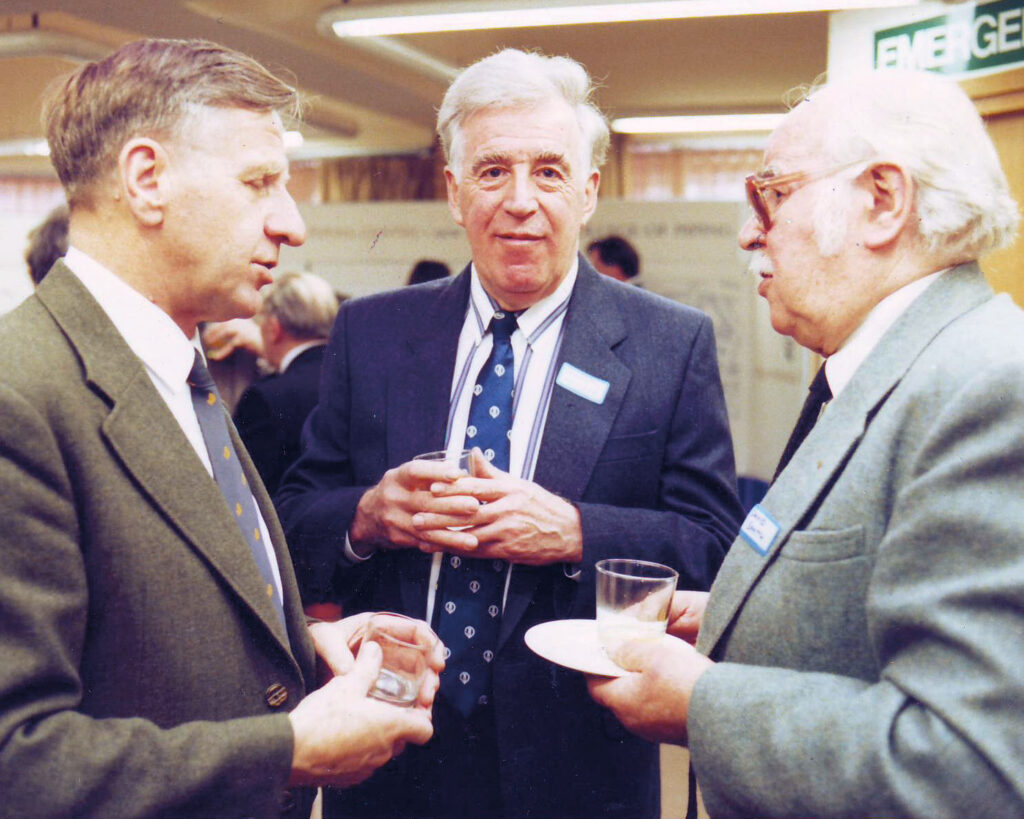
L-R: Dugald MacNeill, Kenny MacLean and David Smith.
SL: You went to Pipe Major Donald MacLeod for a while, didn’t you?
KM: Yes, I went to wee Donald. And he wasn’t on the bench that day [winning the Gold Medal at Oban]. The number of players who got the medals in those days and whose teachers were on the bench …
SL: Did you go to Donald’s house for your lessons with him?
KM: Yes, the house. It was wonderful going to him. We had him for dinner when we lived in Newlands in Glasgow. We went to the tribute dinner, the appreciation held for him in the Grosvenor Hotel. Donald was a lovely man. The most knowledgeable person I ever came across. His practice chanter was always flat. He didn’t have a brilliant pipe at competitions. I don’t know why. But he was a great player and he was very popular. I went to him for about three years. He wouldn’t take any money for my lessons with him.
SL: You’ve known so many great players. I believe you also met Willie Ross and Robert Reid?
KM: Yes. I met Willie Ross in Lawrie’s shop in Renfield Street. I can’t remember the year, maybe the early 1960s. I walked in and he was chatting away. I was introduced to him as one of the up and coming players. He shook my hand.
Big Donald MacLean used to pop in for reeds. I tried to play his pipes once. No chance! He was the Pipe Major of the Glasgow Transport band at one time. I remember one day at Fairfields, he phoned me up looking for a piper to go to France. Off we went and had a great time but I remember at our digs [accommodation] once when Donald’s pipes were lying on his bed. Four of us took it in turns to have a blow. None of us could. We could get the drones sounding but nothing from the chanter. Just then, Donald came in: “Hey Donald, how does such and such a tune go?” He picked them up. Bang! Huge volume. A pipe band sound in itself.
I remember one day at the College, Pipe Major Angus MacDonald was upstairs having a tune. Beautiful. Just beautiful. Beautifully balanced from high A to low A. Low G? … Flat! He asked me what I thought. I said, “Your low G is flat, Angus.” He said, “It’ll come in alright.” I said to him I doubted that. If it’s not there, it’s not there. You see, you shouldn’t sink a reed nor put tape over your sound holes. This isn’t going to affect the overall flatness of the chanter. If you’re flat on low G, you need to look at the rest of the holes/notes. Most people don’t understand what they’re doing.
I remember go through to Edinburgh one day to visit Willie Sinclair in his shop. Willie was a smashing guy and knew what he was about. All his blackwood was stored downstairs for two years before he started work on it. Anyway, the Pipe Major and Pipe Sergeant of a well known Grade 1 band were in and asking Willie to alter individual notes on 20 pipe chanters. All 20 of them. 20 pipers who all blow differently! It was crazy.
I never had time to play in a pipe band. I never really enjoyed listening to them either. I heard lots of bands play at the College. 20 chanters sounding low G is the most horrendous sound! Rasping, unmusical.
SL: The classes at the College in those days were big.
KM: We taught thousands from all over the world. I remember a Japanese lad winning the end-of-term competition one year. On the Thursday evening class, the bottle would come out once lessons had finished and we’d all sit around the big table and have one dram, tell stories and play tunes … It became a club, really. There were people from all over. The end of term competition was invariably won by one of the Thursday evening class pupils. One of my best pupils, Allan Minty, has my pipes these days.
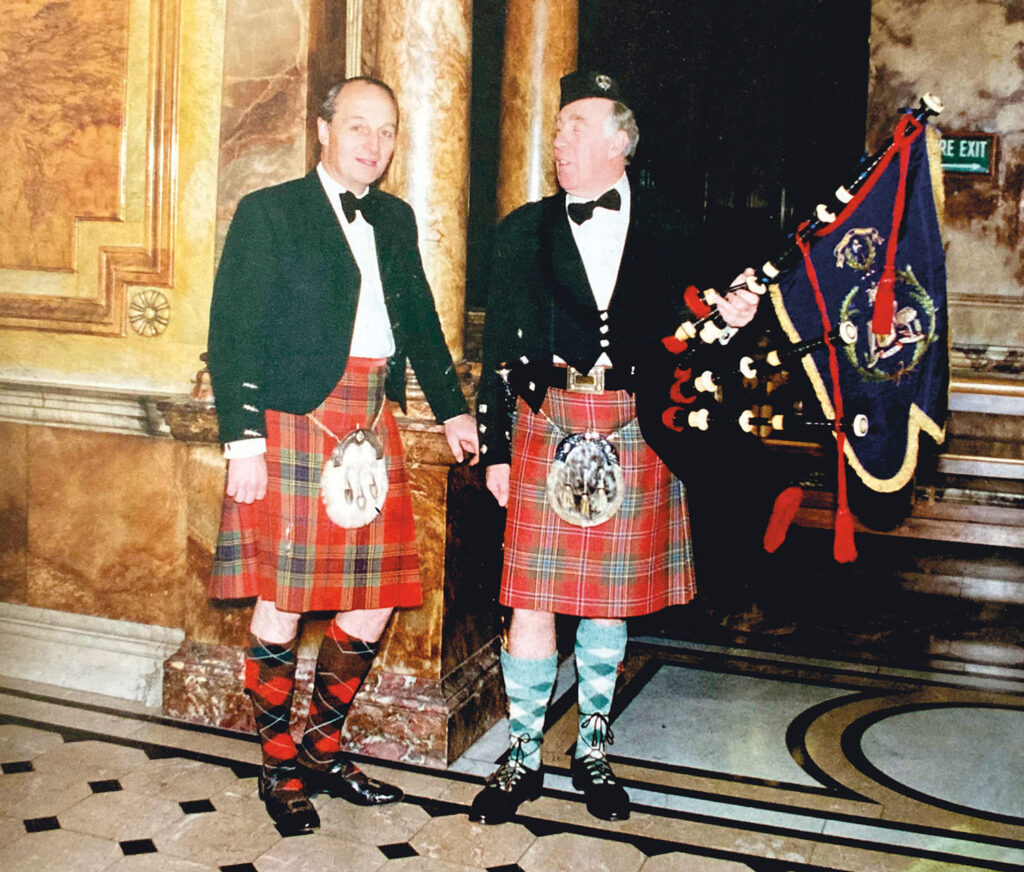
SL: You were the Clan MacLean piper for 14 years. How did it come about and what did it involve?
KM: It didn’t involve that much, really. Iain MacFadyen was the piper before me and he retired so the Secretary of the Clan MacLean, Netta MacLean who lived in Partick, asked me to meet Lachlan MacLean, the chief, to discuss taking over. I played at a lot of clan gatherings and so on at Duart Castle and elsewhere. Jim MacLean came after me.
SL: Kenny, thank you for taking the time to speak with me.