


By Stuart Milne
“A week is a long time in politics,” they say – the implication being that a lot can happen very quickly. This old adage has never been truer in Westminster – such is the turbulence of these times that in the recent Introduction to British Culture exam at the German university where I work, the answer to the routine question, “Who is the current prime minister of the United Kingdom?” changed during the course of the test.
The saying also applies to the greatest week of the piping and drumming calendar, when the community gathers in Glasgow every August for the Piping Live! International Piping Festival, the annual Wednesday night pipe band extravaganza at the Royal Concert Hall, and of course, the raison d’être of this feast for the ears: the World Pipe Band Championships. Reputations are forged, thrilling new artists are discovered, champions are crowned, and as the pipe band competition season reaches its climax, life’s constant cycle of meetings and partings, firsts and lasts takes its inevitable course.

There is so much to see and do all over the city that even the most devoted/least hungover of music fans and well-remunerated of hacks cannot possibly hope to cover everything of interest. As colleagues have already shared detailed thoughts and images from each day’s events in real time, this recap will be a more personal, highlights-driven reflection of things that stood out to me from the festival, the pipe band concert and the action on the Green.
You could happily spend much of the festival listening to nothing but top-quality solo piping. As per tradition, the first marquee event to open Piping Live! was the Masters Solo Competition, open to Highland Society of London Gold Medallists for the piobaireachd event and winners of the A-Grade light music contest at the Argyllshire Gathering and/or Northern Meeting for the March, Strathspey & Reel. Breaking with tradition, however, this year’s event took place on Sunday 9 August instead of the usual Monday slot, which may have explained the greater-than-usual number of empty seats in the National Piping Centre’s main auditorium. A pity, as the evening MSR served up a truly outstanding and enjoyable display of the very best of competitive solo piping. All twenty pipers who played on the night made it through their set without a hitch, and the performances across the board were excellent. Anyone foolhardy enough to put together their own prize list just for fun was faced with some agonising dilemmas over which deserving performers to put in the top five and who had to be left out – certainly no easy task for the three actual judges. Tributes must also be paid to the stewarding team who kept the pipers coming thick and fast, managing to have the event finished on schedule after the MSR began an hour late. The Masters is truly a must-see event for anyone with a passing interest in solo piping – there can be few better opportunities to hear so many of the world’s elite competitors right up close (provided you show up early to grab one of the coveted front-row seats).
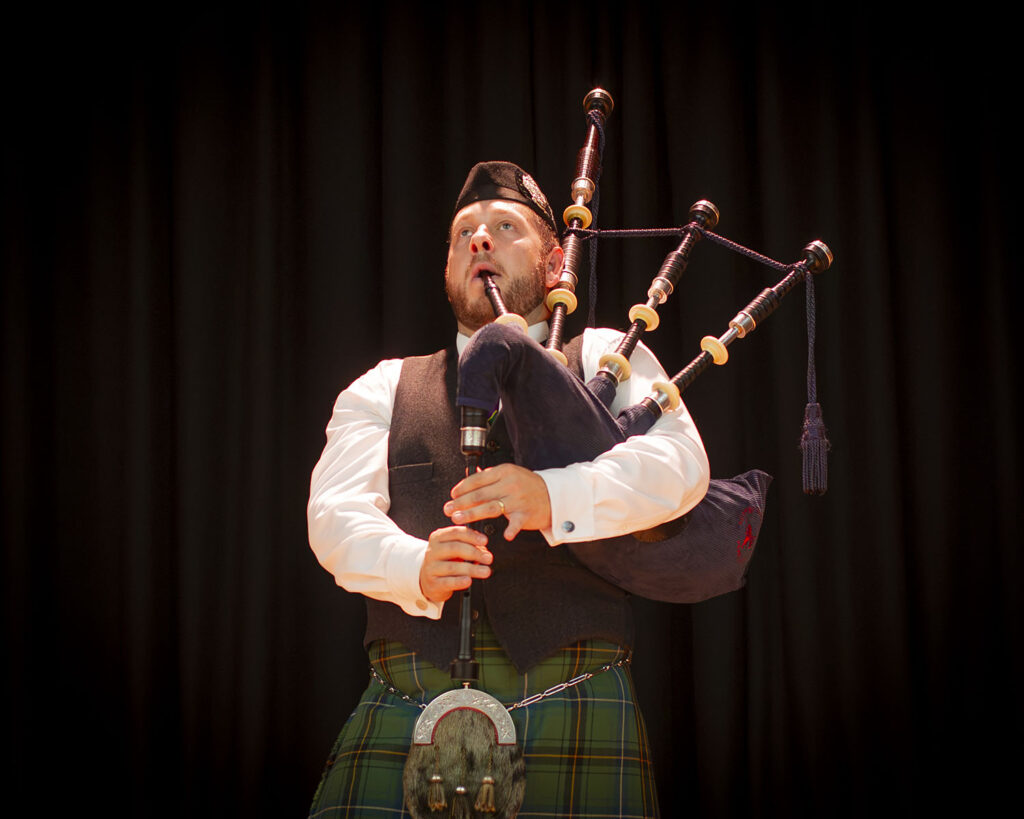
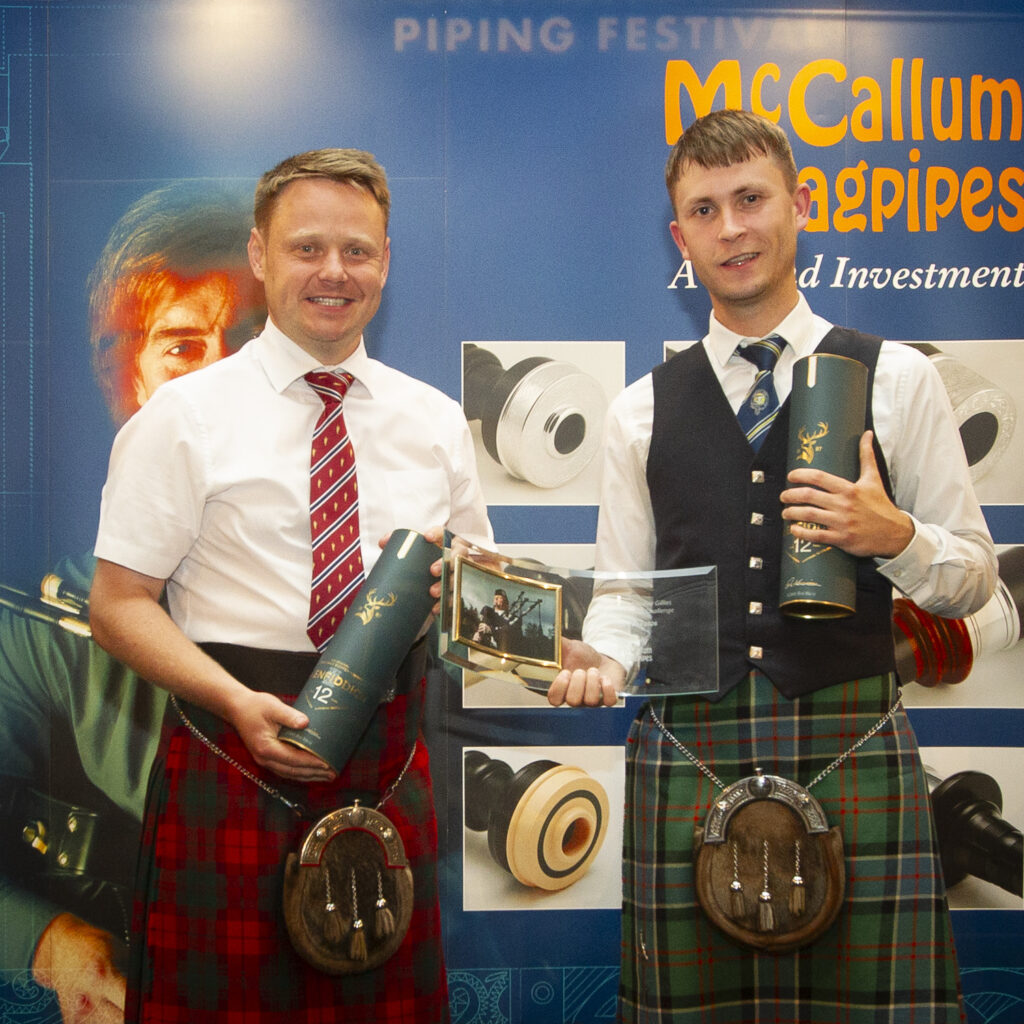
Having said that, by far the most entertaining such occasion is the oldest event in the festival calendar, the Thursday night recital challenge now named after the late, much-missed Pipe Major Alasdair Gillies. Five of the world’s most in-form soloists (Alasdair Henderson, Angus MacColl, Finlay Johnston, Callum Beaumont and Connor Sinclair) were tasked with performing the urlar of a piobaireachd, an MSR, and otherwise knocking the socks off the eager, frequently vocal, audience and secret judges. It was a phenomenal night of music, and my neighbour and I cannot be the only ones who frequently muttered to each other “I must learn that tune” during the breaks. Finlay’s set especially was full of less commonly played but classy tunes that deserve to be heard more – not least his opening pair of marches written by former National Piping Centre colleagues: The Sixth of June – 1944 by Captain Stuart Samson MBE and Wilson Brown’s Stuart MacKenzie’s Welcome to Gairloch. The result could have gone any number of ways, and the tie between Callum and Connor, the first in the twenty-plus years of this competition, is as fair as any.
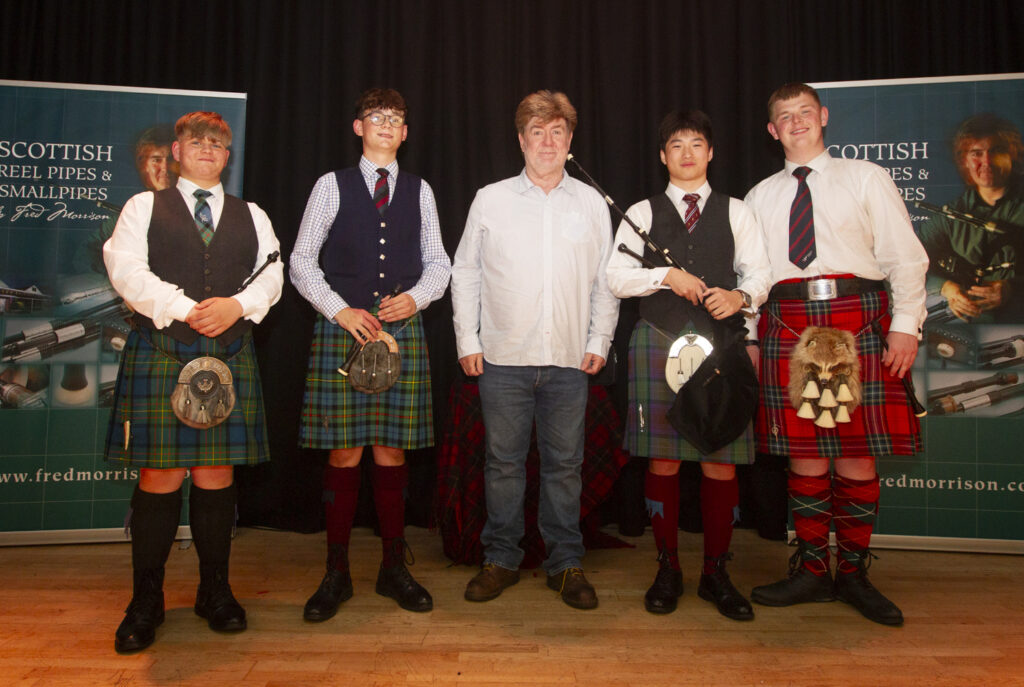
Regular festivalgoers will remember when an even younger Connor Sinclair came to prominence by winning the annual Pipe Idol contest for under-21 solo players in the heady days of 2012. Fourteen years later, the four heat winners of the latest edition (Liam Nicolson, Lachlan Rennie, Kai Hay and Andrew Zhao) delivered a final of exceptional quality. All of them absolutely belonged on the famous (and infamously warm) stage of the Piping Centre auditorium – no wonder the anonymous judges took what might be a record time to finally settle on Andrew Zhao as the winner, to the jubilation of his supporters from the St Thomas Episcopal School and Alumni bands. It was quite incredible that three of the finalists were only sixteen years of age – most of us will never be this good no matter how long we try. There is perhaps a worthwhile lesson from the judges’ decision that you do not have to play jigs, reels and hornpipes at lightning speed to create driving energy and make good music – easier said than done of course when all eyes are on you and the adrenaline is pumping through your veins.
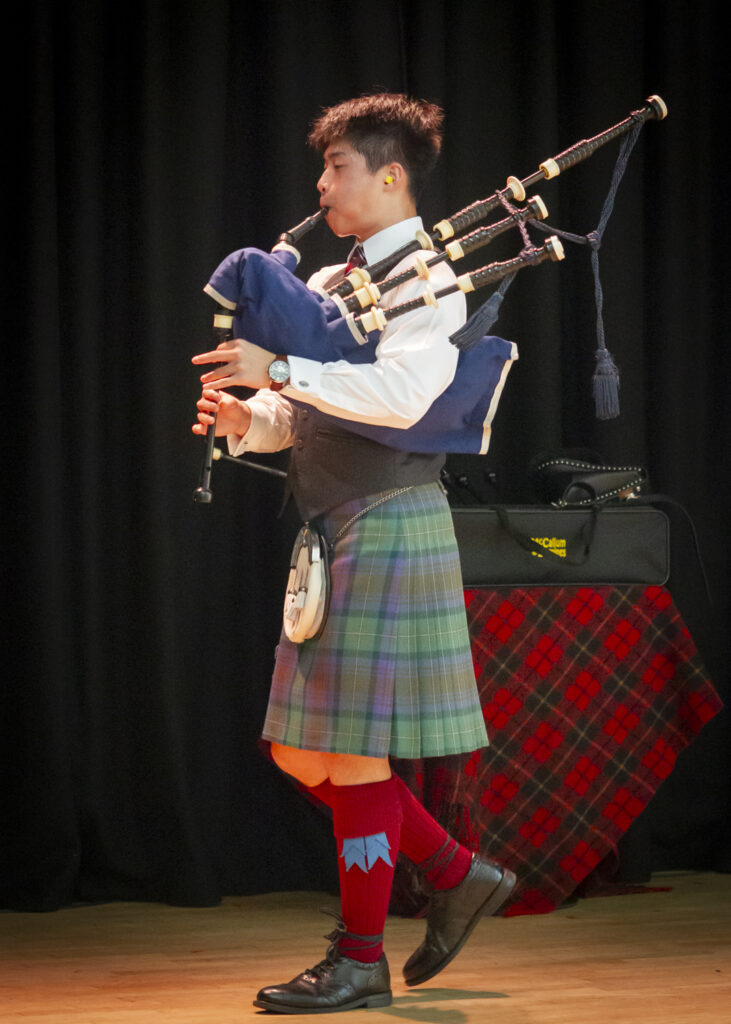
Invaluable experience for players wishing to establish themselves as solo players at various levels is provided by the Competition League for Amateur Solo Pipers (CLASP), whose annual World Championship takes place over several days of Piping Live! at the former College of Piping building in Otago Street. At more than twice the age of most of the Pipe Idol finalists, I finally took the plunge into the previously alien world of solo competition at this year’s events. I would like to sincerely thank the whole CLASP team of organisers and stewards, the adjudicators and my fellow competitors for an exceptionally positive first-time competing experience. I cannot wait to do this again, and would heartily encourage anyone wavering as to whether solo competition is for them to give it a go.
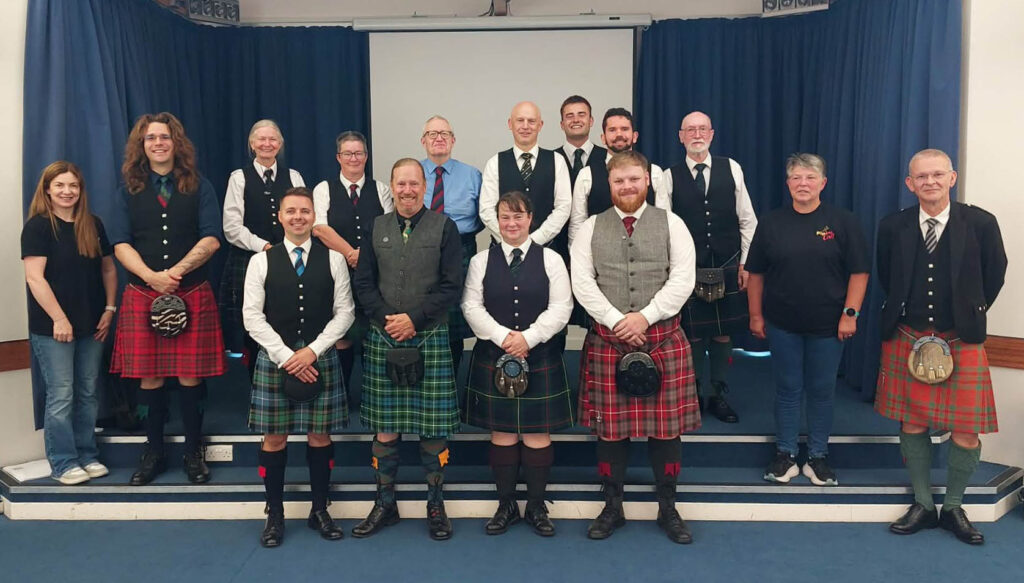
Aspiring soloists and seasoned pros alike were able to pick up a great deal of insight and useful advice from the Learn@Live! panel on the inner drive of elite solo pipers. Three of the world’s very best (Willie McCallum, Murray Henderson and Callum Beaumont) took part in a fascinating discussion chaired by Dr Andrew Bova. Some notable titbits included Willie’s perpetual goal of being the most prepared competitor at any event he enters, Murray’s reminiscences of placing first in a mighty field of two at his first contest, and Callum’s sobering assessment of how to motivate a generation of children who will happily amuse themselves at home by dabbling in multiple activities for five minutes each in the space of an hour, an approach that does not lend itself naturally to the rigorous demands of learning bagpipe gracework and steady blowing. Changes in teaching methodology are required to make piping fun for today’s young learners, which apparently, even in a programme as prestigious as Dollar Academy’s, occasionally involves printing off the sheet music for Star Wars.
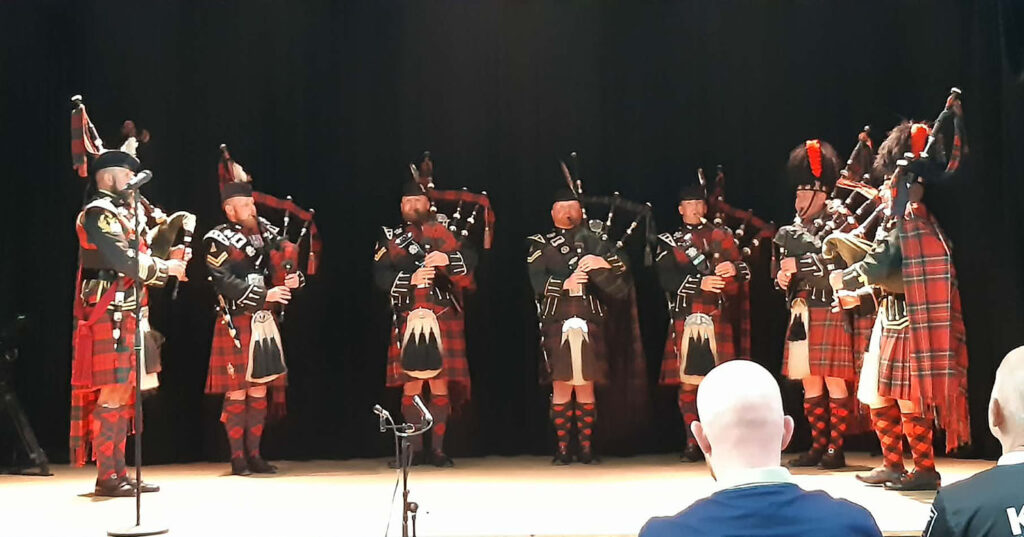
A great many of our best-ever pipers saw service in the British Army for much of the history of our artform. Those days may be gone, but going by the launch of the new music collection of the Royal Regiment of Scotland, twenty years old this year, there is plenty of composing and playing talent still in the ranks. It was a particular privilege to hear Norman Gillies, son of Alasdair Gillies, perform a self-composed piobaireachd in honour of the regiment. While it would be hard to replace some of the more established regimental collections as the gold standard of piping tune books, the new volume would make for an intriguing first music book for emerging pipers thanks to the combination of well-kent regimental tunes still played by pipe bands the world over and exciting new compositions – there are some cracking 12/8 marches in there.
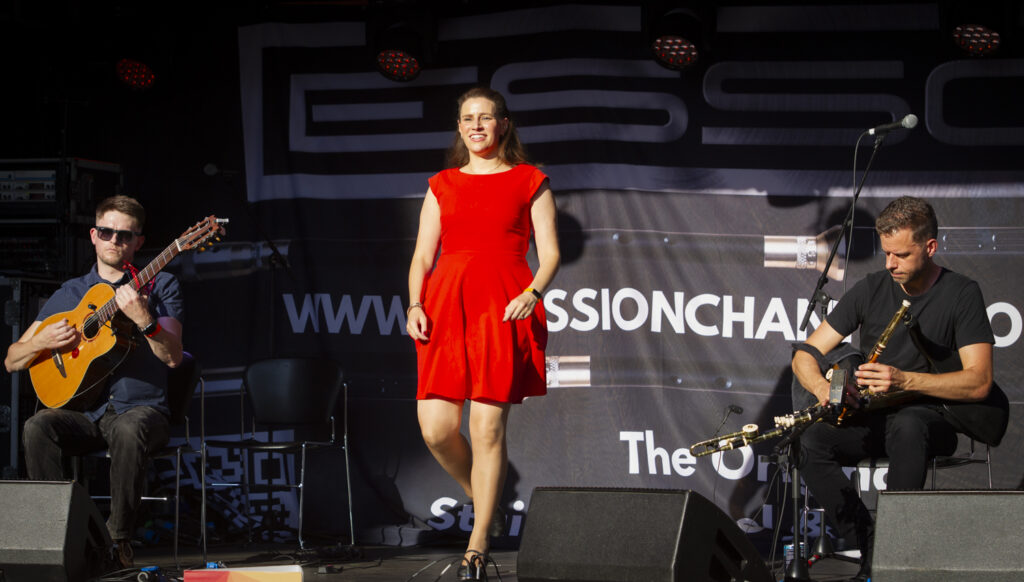
There are many more kinds of piping to be enjoyed during Piping Live! – not least the many Scottish, Irish and international folk groups bringing classic festival vibes to proceedings – there was plenty of dancing going on in the crowd during many performances, and the tender ages of some of the most enthusiastic participants suggests this was due to the music rather than the generous offerings of the festival bar. Highlights for me included the bagpipe/accordion combination of Portuguese duo Alma Menor, the uilleann pipes of Calum Stewart supported by Luc McNally and Sophie Stephenson, and the original tunes and tremendous atmosphere of the Ailis Sutherland Band. Ailis has been a staple of the solo, pipe band and folk scene for many years now, and this is clearly the right time for her to take the spotlight as a major artist in her own right.
A special mention must also go to Trail West piper Seonaidh MacIntyre, who brought his characteristic Hebridean brand of Gaelic piping and song tradition to Thursday’s headline lunchtime recital. Dressed, unusually, in solo piping attire, he brought the West Coast ceilidh style of music to the main NPC auditorium that makes bands like Trail West and their contemporaries so beloved by audiences the world over. It is a pleasure to hear the music of one so steeped in a very particular subculture of piping, and his recital was magnificent.
A recurring thread running through the festival programme was Ceol Nua – a dedicated platform for new, genre-bending music and acquired tastes. Being of a generation who missed hearing Martyn Bennett perform live before his untimely passing in 2005, I found myself drawn to the Monday night performance in the basement of Sauchiehall Street’s Nice ‘N’ Sleazy to experience the next best thing – a trio of avante-garde musicians – Erwan Keravec, Harry Gorski-Brown and Flynn Butler Fraser – pushing the bagpipe to its limits in ways few others will dare. While Harry and Flynn’s more sedate, Sigur Rós-like approach to fusing bagpipes, electronica and, in Harry’s case, Gaelic song, did not exactly get the toes tapping like much of the club music that so grabbed Martyn Bennett as a young man, Erwan’s performance was one of the most radical and mesmerising performances on a bagpipe I have ever seen. A half hour of a lone piper squeezing his bag while deliberately double-toning his drones, retuning them to create different layers of texture and making music with his chanter without ever seemingly performing a tune as most listeners would recognise it does not, on paper, sound like something for everyone – and it probably isn’t. To manipulate the bagpipe in this way requires a mastery of the instrument that may be instinctively repellent to competitive solo pipers and band players drilled to always keep their pipes in tune as perfectly as possible, but my goodness is it something to behold.
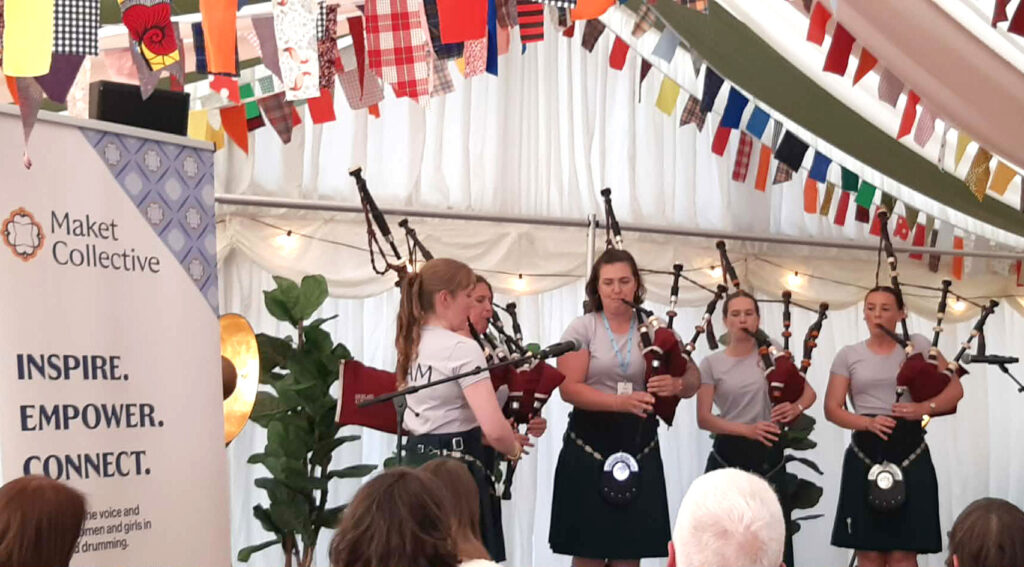
The Bothy Tent to the side of the main stage at the festival site offered a very different, more intimate vibe to proceedings. One of the best-received events during the week was the Monday showcase of the Maket Collective for female pipers and drummers. The appreciative audience were treated to performances from a quartet from this year’s Pipe Idol contest, members of the Royal Burgh of Annan and 78th Fraser Highlanders pipe bands, and the biggest cheer was given to the five female pipers from St Laurence O’Toole Pipe Band, who marched in to their band’s signature tune, The Dawning of the Day. The opening tune from the band’s live recording of that name has become such a beloved classic partly due to its beautiful simplicity, but also the poignancy of the duet being performed by a father and son. Hearing it performed by five women, four of whom were not from the island of Ireland, was another special moment in the storied history of this tune, and yet another sign of the global appeal of this immensely popular band and the musical tradition it has carried nobly for over a century.
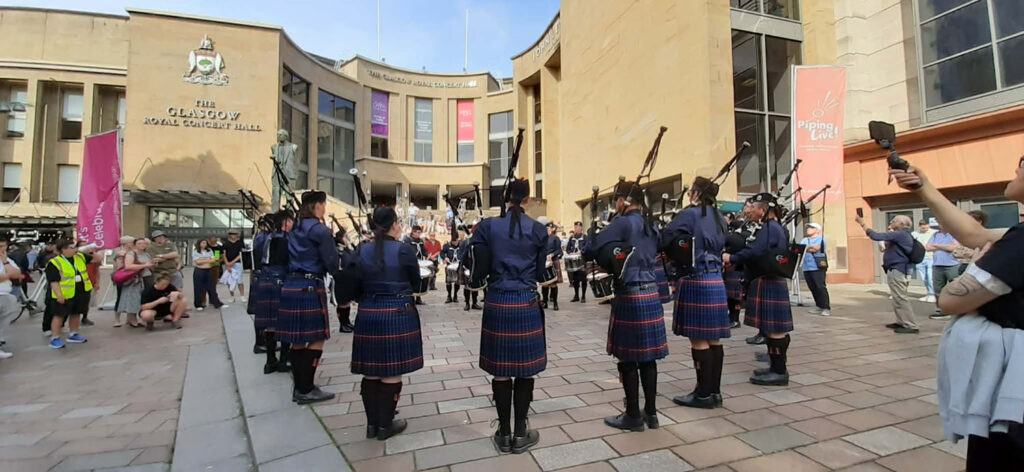
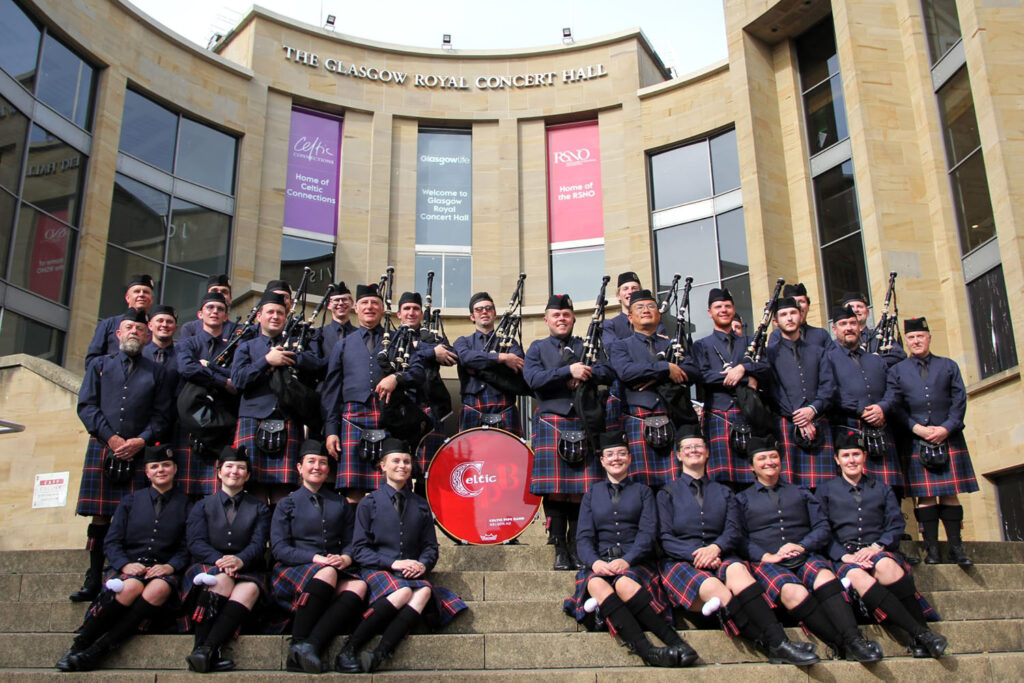
Of course, the whole reason this festival exists is because of the captive audience of pipers and drummers assembled in Glasgow for the World Pipe Band Championships, and many bands put on public performances and open practices for fans to enjoy. With George Square, once a major festival hub, once again out of commission, the street performances were moved this year to Sauchiehall Street and the iconic steps of the Glasgow Royal Concert Hall. It was a particular pleasure to once again hear the Grade 2 Celtic Pipe Band, who have become regular visitors to Scotland. Having also made the trip in the other direction to visit the New Zealand National Championships, I have come to better appreciate what a sacrifice it is for a band to make this long, arduous and hideously expensive journey – one that would surely not be reciprocated by British Isles bands in anything like equivalent numbers were the shoe on the other foot. Spending years perfecting your artform and travelling halfway across the world to perform in the ancestral home of your chosen music only to be serenaded by a local Weegie belting out “No Scotland, no party!” must be rather surreal.
As my colleague Chris MacKenzie has already reviewed the Wednesday night concert by the 78th Fraser Highlanders Pipe Band, I will simply offer some brief reflections on True North Strong (and free programmes!). Few bands bring as much musical weight to this fixture as the Frasers – their Live in Ireland concert and album changed pipe band music forever, and the greatest hits from that night (the likes of Lord Lovat’s Lament, Journey to Skye and the Mason’s Apron medley) remain immortal. I loved a great deal of the new repertoire, especially the material based on songs: the opening strains of The Wayfaring Stranger, sung beautifully and eerily by Pipe Sergeant Ian K. MacDonald’s daughter Ashlyn, the majestic and spine-tingling recreation of Gaelic psalm singing in Martyrs and, above all, the singalong rendition of Canadian classic The Northwest Passage led by Bobby Watt. Fittingly, the presence of the late, great Bill Livingstone, who led the band for nearly 30 years and brought so much innovation to our music, was keenly felt in some of the tune choices throughout the evening and a brief recording of his voice introducing Journey to Skye.
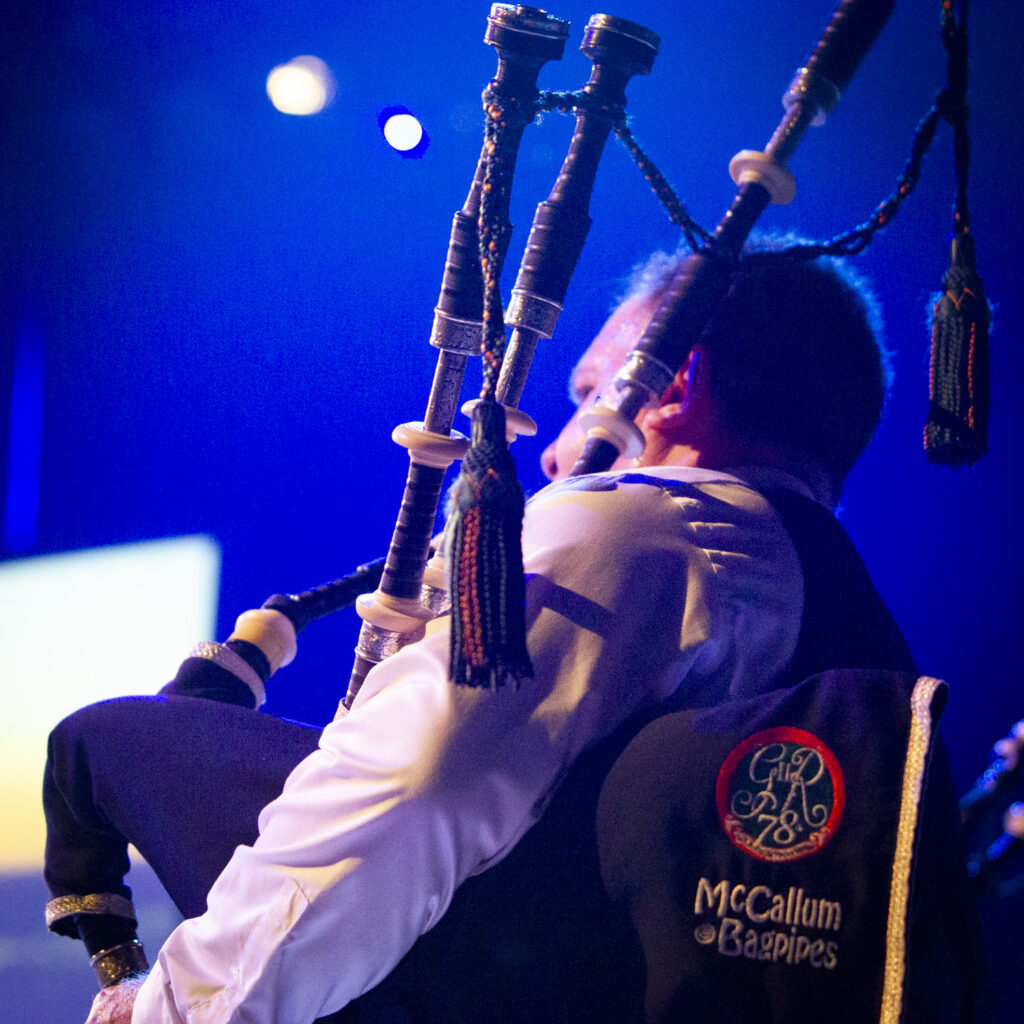
When the Frasers took to the Ballymena stage back in 1987, they were probably not joined by Highland dancers (the very young ladies of the dance team were superb all night long) or a big screen to project images and videos. Both featured in the spectacular recreation of the Legend of the Flying Canoe through a suite of French-Canadian tunes. Enjoyable though the animation telling the story on the big screen was, the combination of this and the dancing display on the stage resulted in sensory overload, and I found myself not listening properly to the music as my eyes flitted between the screen and the dancers. The evening also felt noticeably shorter than most of these concerts, with formalities comfortably concluded by 10pm after the usual 7:30 start. Opinions differ as to how long these pipe band concerts should be, but I felt disappointed not to be given more as I was beginning to really lap up both halves of music. Unlike some previous phases of Pipe Major Michael Grey’s illustrious and controversial music career, it cannot be denied that the evening was deeply rooted in the Canadian, Scottish and Irish traditions this band has embodied for four decades, and the recording will make a fine addition to the vinyl collections of piping afficionados and hipsters everywhere.
The big day itself on Glasgow Green has morphed, World Cup style, into a big weekend, with far more happening on Friday than usual. In addition to the frankly redundant first round of Grade 1 performances and the Novice B, A and Juvenile competitions in the afternoon and evening, for the first time the Grade 2 qualifying heats were held on Friday parallel to the Grade 1 competition. This had two effects: the 12 finalists had to play an unprecedented three times over the weekend, and for the bands that did not make the cut, their World Championship was over by Friday lunchtime. There must surely be a better way of accommodating all the performances that are strictly necessary within a reasonable timeframe on a single day – substituting the interminable marchpast with the march-on rendition of Scotland the Brave may be messier, but it is a more spectacular and much, much faster way of bringing the bands onto the park for the prizegiving. The event concluded by the refreshingly early time of 7:08pm, giving those with cause for celebration plenty of time to enjoy their night.
As well as bands and players alike making history in their own way in a weekend of firsts, as is the nature of life, many also took to the grass of Glasgow Green to do what they do one last time. Notable retirees known to this author include Mike Cusack, titan of piping in the United States and driving force behind St Thomas Episcopal School’s formable piping and drumming programme; serial prizewinning tenor drummer Sarah Ferry, 21-year veteran of Field Marshal Montgomery; and Canadian legend and voice of the BBC’s Worlds coverage Bob Worrall, judging his final RSPBA major. In far more serious and tragic circumstances, spare a thought and prayer for the family of Duncan Luke, who passed away within hours of competing with Dunoon Argyll Pipe Band.
It becomes apparent when you spend a whole day running between arenas and listening to bands just how hard it is to win a World Championship. As well as the countless discarded water bottles, Glasgow Green is littered with the dashed hopes and broken dreams of bands who played well enough to win their grade, crack the top six or qualify for their final, but were pushed out of the running by cold, hard maths: someone must always be first, last or, worst of all, seventh. The newly-crowned World Champion from the North Lanarkshire Schools Novice Juvenile A band whose hand I shook while watching Saturday’s prizegiving would not have remembered Simon Fraser University Pipe Band winning their previous World title in 2009. In those 17 long years SFU have remained one of the best and most popular pipe bands in the world, selling out concert halls around the globe, yet the big prize they strive for every year stayed out of reach until last week. You learn quickly in this game that no one is entitled to success at any level, and when it does come, it is to be cherished.
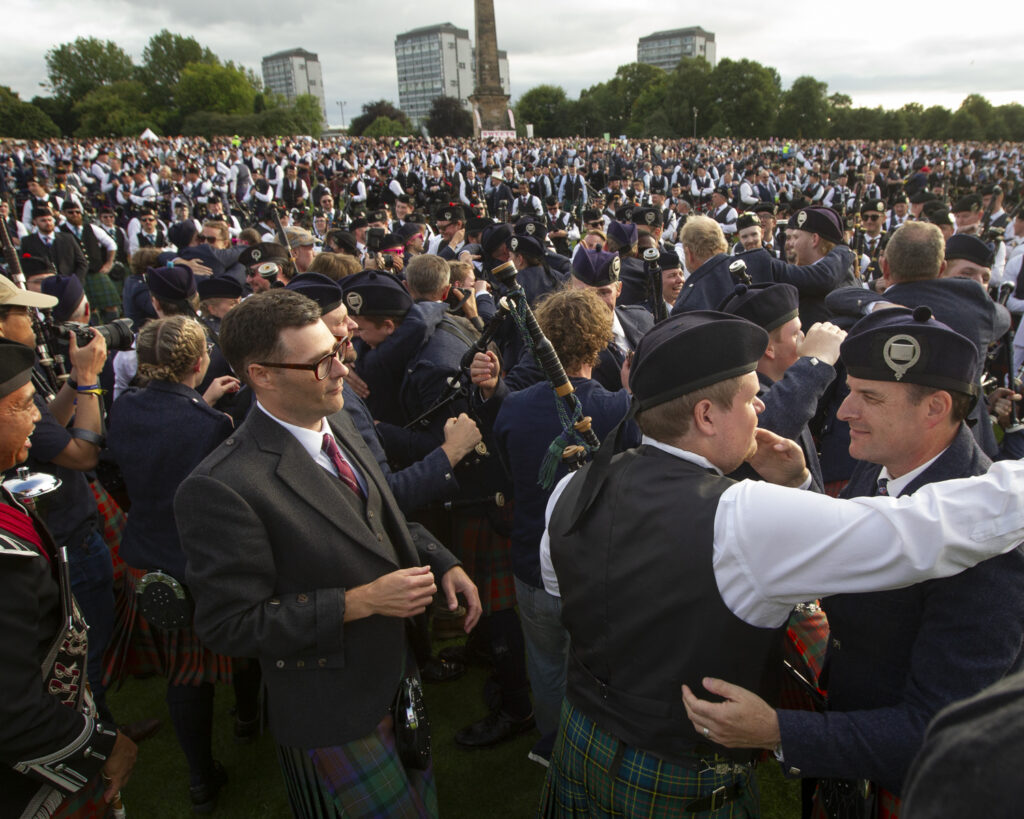
It is precisely this that made the week a deeply emotional one for me, as I spent much of it reconnecting with my past. While waiting to enter the main auditorium at the National Piping Centre’s Otago street site, I spotted a plaque on the wall bearing the name of my first teacher, John Long, who gave me lessons as a learner piper with the Ellon & District RBL Pipe Band. The unexpected sight moved me to tears: here I was a quarter of a century later in a kilt at one of the meccas of world piping to compete in my first solo competition, something I never thought I would do, thanks to the solid foundation his instruction gave me as a boy. It was a pleasure to catch up on Saturday with some members of the Ellon band who still remembered me, one of whom was another of John’s pupils.
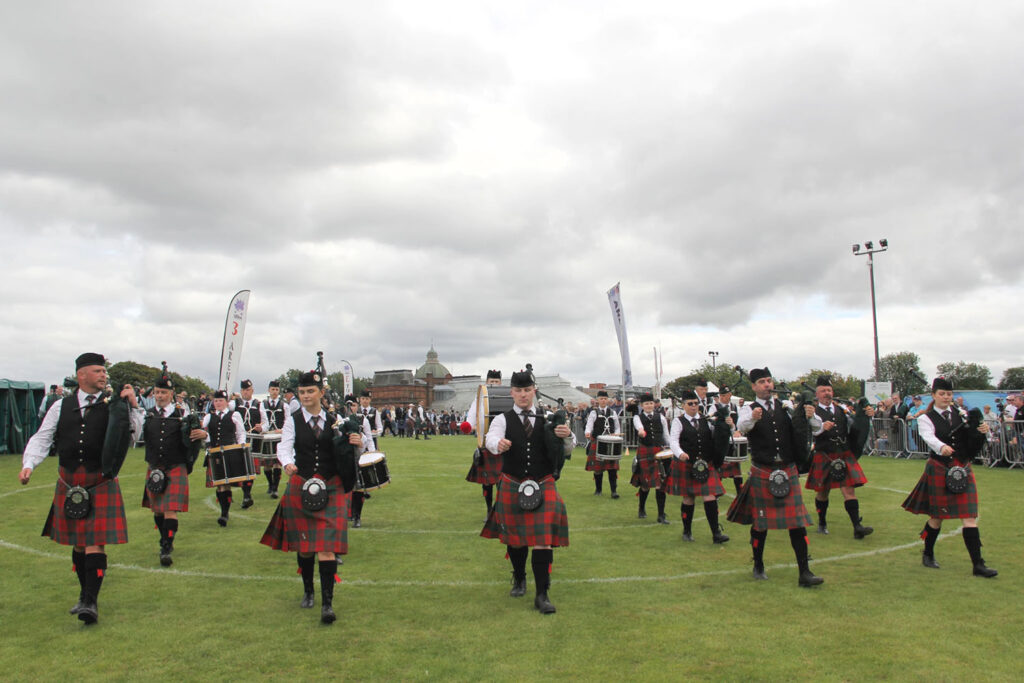
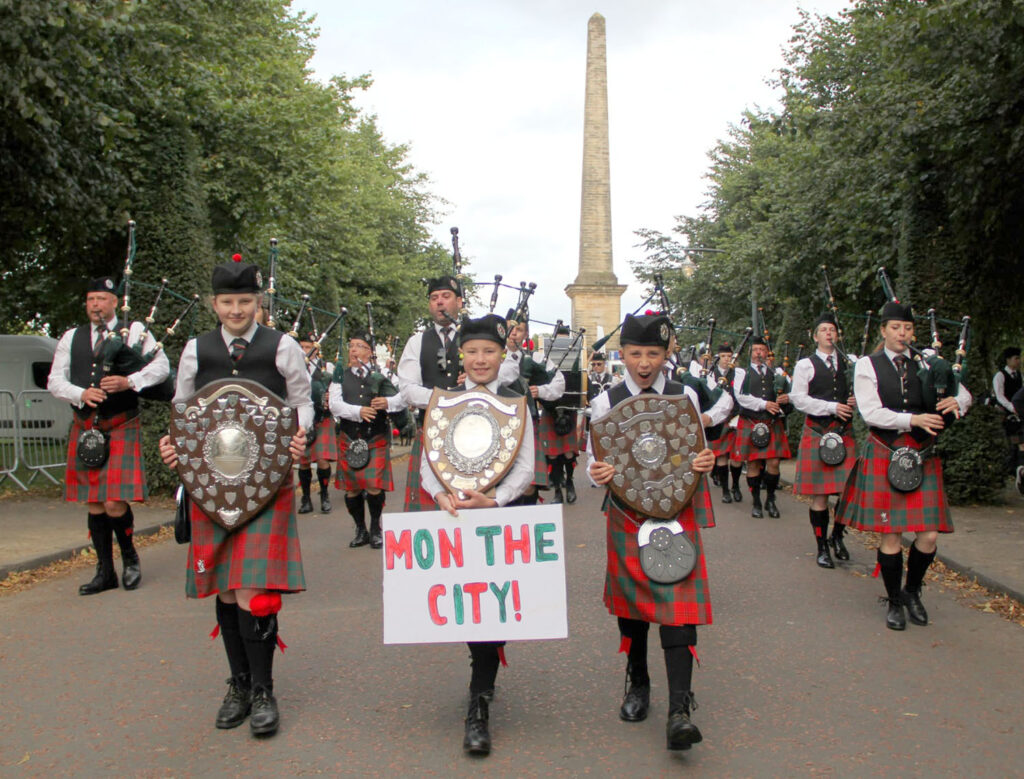
I also spent a large part of Saturday supporting the City of St Andrews Pipe Band, whom I played with for four years as a student. Once a regular fixture in prize lists from Grades 4 to 2, the band has momentum behind it again at last, thanks in large part to a group of players, instructors and supporters I remember from the old days who have come back to bring their experience to the new crop of young players. Although I left the band fifteen years ago, I found myself utterly invested in their success in the Grade 4A final. In all my years of following pipe bands, soloists and mostly mediocre sports teams, I have never wanted anyone to win something as badly as I wanted the City to finally win the Worlds that day. They came agonisingly close, and Carrigaline were worthy winners of a tough final, but second place and Champion of Champions as a band and drum corps is a magnificent end to their best season in decades. Photographing a band I used to play in being applauded off Glasgow Green carrying three trophies is a memory I will treasure forever.
The most fitting way to summarise the whole day came from someone I knew from my student days, who told me afterwards: “Today is for everyone who’s ever worn a City kilt”. There have been many such people in the band´s fifty years of performing, and many of those I know would be most proud of their old band’s achievement are no longer here to see it. All over Glasgow and on band buses across Scotland that fateful night, many prize-winners and World Champions in a host of different tartans will have been thinking the same.
So whenever success comes our way, be it in our music or anything else in life, it is up to us, in our moment of purest bliss, to raise a glass to the ones who brought us this far, and say “thank you”.