

By Dr Sandy Geyer

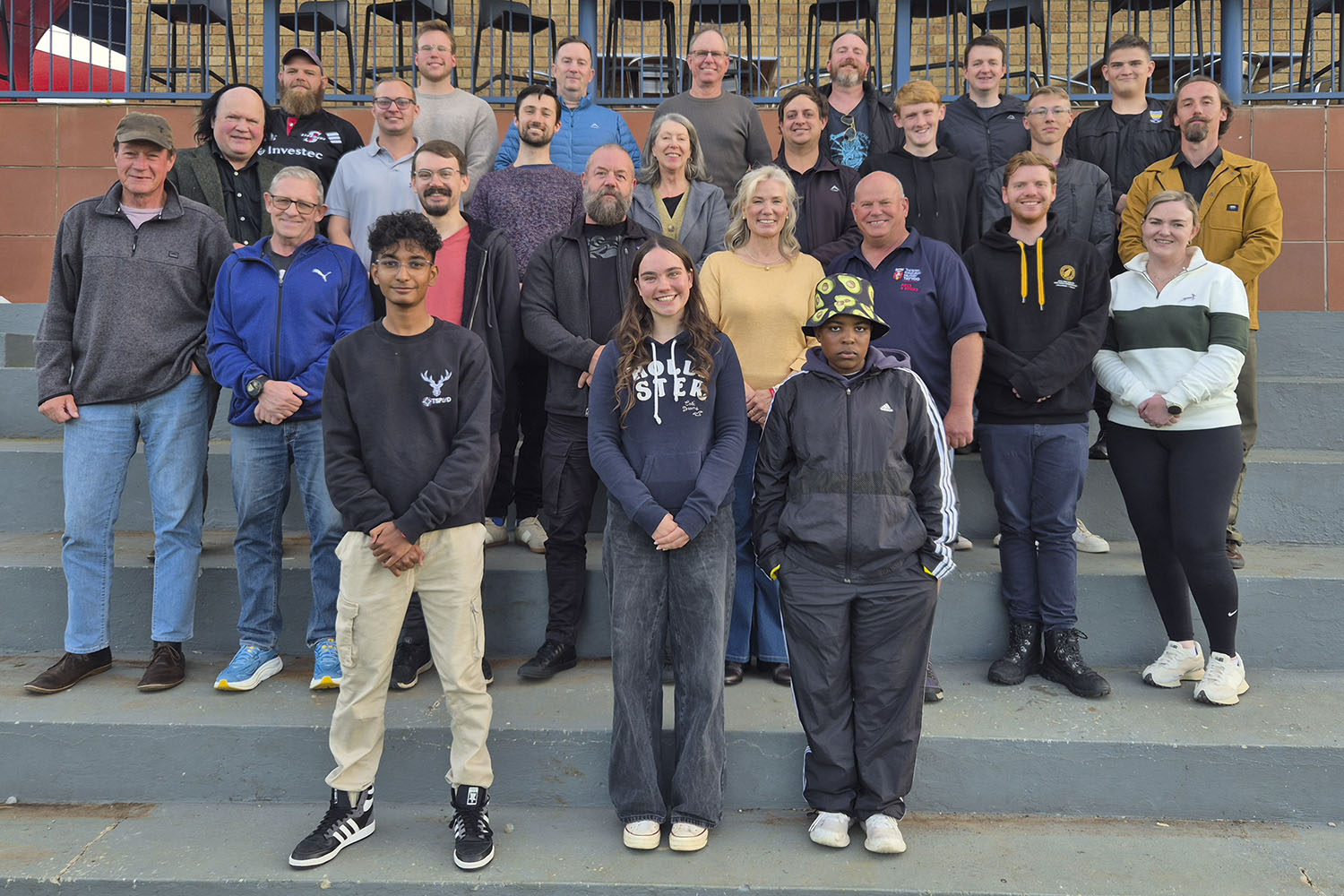
On 9 May 2026, something slightly different took place in Johannesburg.
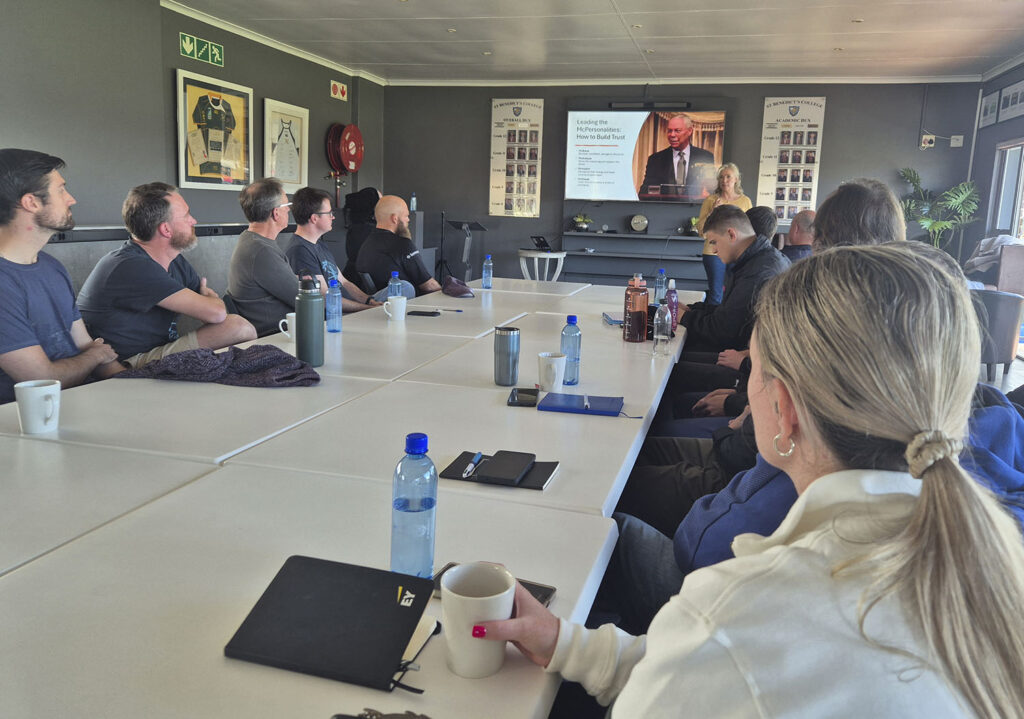
For three hours, representatives from approximately eight South African pipe bands – including Pipe Majors, Drum Sergeants, tutors, senior players and future leaders – gathered for a leadership seminar that placed the focus not on music, technique or competition preparation, but on the person behind the instrument.

The discussions that followed revealed just how much leadership in pipe bands extends beyond titles, instruction and rehearsal structures. They touched on culture, personality, belonging, retention, communication, gender, identity, pressure, succession, and the often-unspoken reasons why players stay – or leave.
What emerged was not a neat set of answers, but the beginning of a much larger conversation.
So What Do I Mean by “Leadership as Identity”?
The seminar explored the idea that leadership is often taught primarily as behaviour – something people do, imitate, or perform externally. But leadership developed only as a skillset can become fragile if it is not supported by deeper self-awareness, identity and self-leadership.
Let me explain what I mean by that in a pipe band context.
Most of us can recognise visible leadership behaviours fairly easily. We see who gives instruction confidently, who takes charge under pressure, who motivates others well, or who appears calm and capable in front of a band. We also all know at least one person who can glare over a snare drum in a way that can stop your soul halfway across a practice field.
Over time, younger players and emerging leaders often learn to imitate those visible behaviours because that is what leadership appears to look like from the outside.
But underneath those visible behaviours sits something deeper.
How does that leader handle frustration?
How do they respond when challenged?
Do they create belonging or fear?
Do they make space for different personalities and learning styles?
Can they regulate themselves under pressure when the band is falling apart five minutes before stepping onto the circle?
Do people grow around them – or simply comply around them?
That is where leadership starts moving beyond performance and into identity.
One of the core ideas explored during the seminar was that sustainable leadership develops first as the “being” of leadership before it becomes only the “doing” of leadership. In other words, leadership is not simply about learning how to lead others. It is also about understanding ourselves well enough to contribute positively to the people and cultures around us.
In a pipe band environment – where strong personalities, tradition, pride, pressure, volunteerism and deep emotional investment often intersect – that distinction becomes incredibly important.
And if we are honest, pipe bands are wonderfully human places. Which means they can also sometimes be wonderfully complicated places.
The Conversations That Emerged
In practical pipe band terms, this meant exploring questions such as:
- Who do we become under pressure?
- What leadership behaviours do we inherit without questioning?
- How do different personalities experience the same band culture differently?
- What causes some players to thrive while others quietly disappear?
- How do school systems, cultural backgrounds, gender expectations and communication styles shape leadership experiences within bands?
One of the most engaged areas of discussion centred around the “McPersonalities” framework used during the seminar – a practical and accessible way of exploring differing communication and leadership styles within pipe bands.
Participants reflected on how certain personalities naturally gravitate toward structure and precision, while others contribute through vision, relationship-building, stability or creativity. Discussions also explored how conflict often emerges not because people are unwilling, but because they are often operating from fundamentally different ways of seeing the world.
Sometimes the “difficult person” in the room is not actually difficult at all. They may simply be wired differently from the person trying to lead them.
That insight alone generated some fascinating discussions.
The seminar also introduced the contrasting ideas of “McContribute” and “McEntitlement” – two very different mindsets in how they show up around ownership, responsibility, volunteering, succession and band culture.
Again, this was never framed around blame.
The discussions repeatedly returned instead to a deeper question:
What kind of leadership cultures are we unintentionally creating – and what kind of future leaders are those cultures producing?
What Participants Reflected Back
Feedback from attendees reflected both the relevance and emotional depth of the discussions.
Participants described the session as:
- “Very enlightening”
- “Eye opening”
- “A topic that isn’t spoken about enough in pipe bands”
- “Important for our collective future”
Several recurring themes emerged strongly through the written feedback:
- understanding different leadership styles,
- improving player retention,
- cultural and gender inclusivity,
- preparing future leaders,
- and building healthier band cultures.
One participant reflected:
“Maintaining a successful band needs work to integrate these styles together.”
Another wrote:
“How severe the player retention and growth situation in the country is, and how much leadership is vital in improving it.”
For a three-hour seminar, the conversations ran remarkably deep remarkably quickly – which probably says something important about how ready many people already were to have them.
What Can South Africa Contribute Globally?
Some of the richest discussions emerged when participants began considering what the South African pipe band environment itself may be able to contribute to global leadership conversations.
South African bands operate within layers of complexity involving culture, economics, diversity, education systems, transformation, volunteerism and changing generational expectations. Yet within those challenges also exist remarkable resilience, adaptability and community-based leadership approaches.
Questions explored included:
- What leadership behaviours do we inherit without questioning?
- How do we intentionally prepare future leaders?
- How do bands create belonging across difference?
- What can the global pipe band community learn from South African leadership experiences?
What became increasingly clear is that leadership conversations within pipe bands are no longer only about authority, instruction or competition results.
Increasingly, they are about people.
About whether players feel seen.
Whether younger members feel leadership belongs to them too.
Whether different personalities can contribute meaningfully.
Whether traditions can evolve without losing identity.
And whether bands are consciously building cultures people actually want to remain part of.
The Conversation Continues
The three-hour seminar barely scratched the surface. But perhaps that was never really the point.
Perhaps the real value was simply opening a space for conversations many bands are already needing to have.
Due to the strong response and requests for continued engagement, an online version of the seminar series is expected to launch in the coming weeks, alongside deeper follow-up discussions on topics such as:
- leadership as identity,
- communication styles,
- belonging and inclusion,
- women in pipe bands,
- tutor leadership,
- leadership under pressure,
- and preparing future pipe band leaders.
Because ultimately, pipe bands do not only develop musicians.
They also shape identity, belonging, confidence, resilience and future leadership.
And perhaps the future strength of our bands may depend not only on how well we teach people to play – but on how well we learn to understand the people who are playing.
My sincere thanks to the Pipe Band Association of Southern Africa, St Benedict’s College, the organisers, and the many band representatives who made the seminar possible. The willingness of people to show up, contribute openly and engage thoughtfully in sometimes quite challenging conversations probably said as much about the future of our bands as the seminar itself.
Dr. Sandy Geyer is an author, educator, business leader and competitive piper living in New Zealand. She holds a doctorate in entrepreneurial leadership preparation (DPP) and works internationally in leadership development for students, teachers, and business owners.