

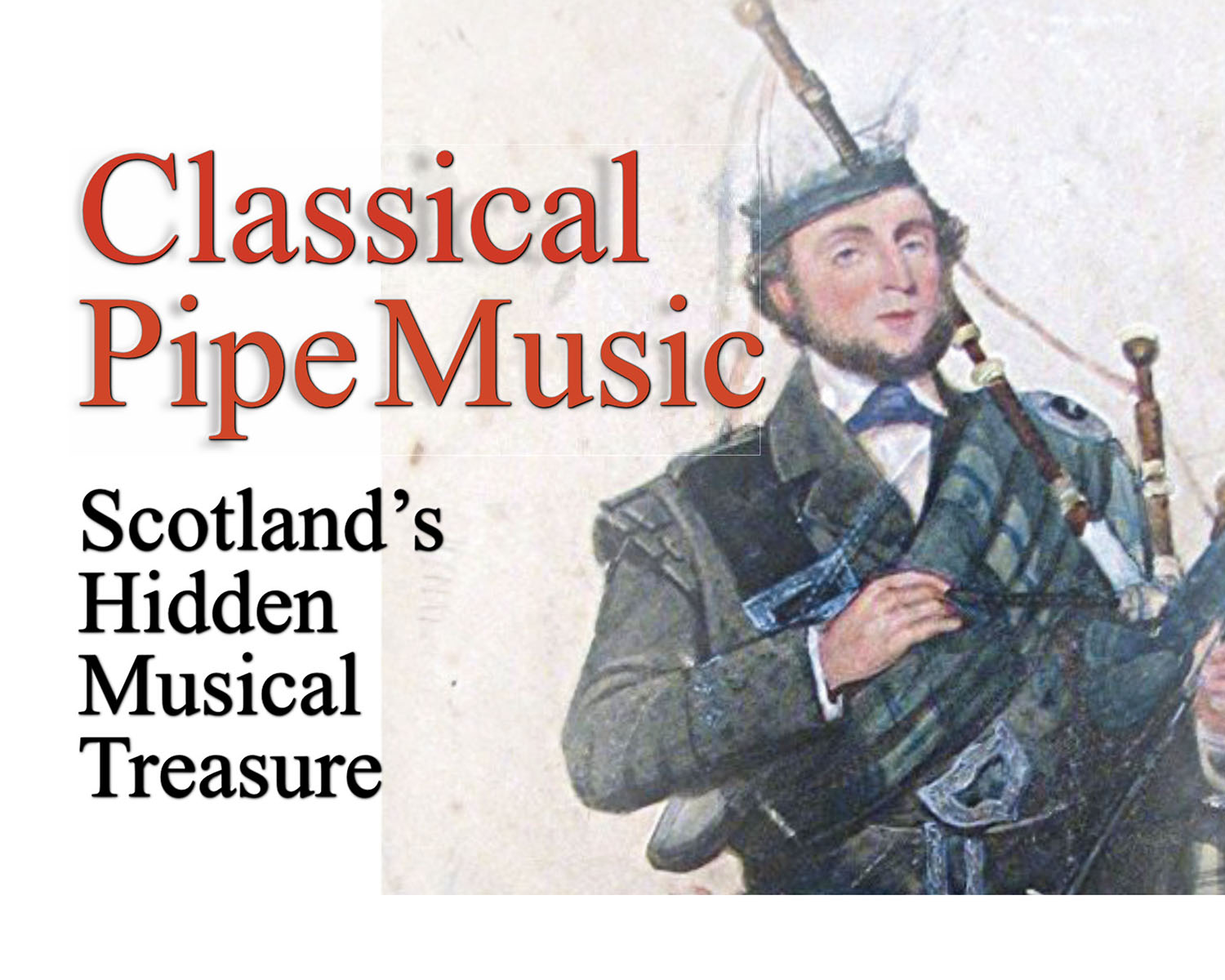
This is a long standing annual event promoted by the Piobaireachd Society. It will take place in the centre of Edinburgh at St Celilia’s Hall on Sunday, August 9th, 2026 with a 7.30pm start. The performers are Callum Wynd, Kyle Cameron and Sean McKeown.
Callum Wynd comes from Dunblane but now resides in Stirling. He was taught by Sandy Davidson MBE, Andrew Wright, Ian McLellan BEM, and now William McCallum. Callum won the B Grade March, Strathspey and Reel and the Silver Medal at the Northern Meeting (Inverness) in 2025, as well as the Strachan Memorial A Grade March, Strathspey and Reel in London. Away from piping, Callum works as a Tenant Engagement Officer. He also enjoys playing tennis and badminton in his spare time.
Kyle Cameron hails from the Black Isle, and was taught by local minister and Gaelic speaker, Fr. Mel Langille, and now Finlay Johnston and Roderick MacLeod MBE. His hometown is now Tobermory on the Isle of Mull, and he is studying Electronic and Electrical Engineering in Glasgow. Piping prizes include the MacGregor Memorial in 2024 and the Silver Medal at the Argyllshire Gathering (Oban) in 2025. He works part-time at bagpipe reed manufacturer Pipe Dreams and enjoys playing squash and sailing.

Sean McKeown lives near Toronto and was taught by Gail Brown and Bill Livingstone, playing with pipe bands including Milton Optimist, 78th Fraser Highlanders, the Toronto Police and now Field Marshal Montgomery. He has won prizes at both Oban and Inverness, including the Silver Medal, A Grade Hornpipe & Jig, and 2nd place in the Gold Medal at both contests. His police work has included the protection of former U.S. Presidents, Prime Ministers, Royal Family members and Taylor Swift. He mentors youth in piping locally, sharing his experience with the next generation.
The concert begins with an introduction from Peter McCalister, Vice President of the Piobaireachd Society, and the performances follow in this order:
- Lament for the Viscount of Dundee – Sean McKeown
- Rory MacLeod’s Lament – Kyle Cameron
- The Prince’s Salute – Callum Wynd
Interval
- The MacDonalds are Simple – Callum Wynd
- You’re Welcome, Ewan Lochiel – Kyle Cameron
- Port Urlar – Sean McKeown
The Music
Lament for the Viscount of Dundee
John Graham of Claverhouse, 1st Viscount Dundee, was a Scottish soldier and nobleman, responsible for policing southwest Scotland during the late 17th century. Thereafter he remained loyal to James II after the Glorious Revolution of 1688 deposed the king. Dundee rallied Highland clans loyal to the Jacobite cause and in 1689 led them to victory at Killiecrankie – but lost his life in the battle.
Rory MacLeod’s Lament
This tune is known to us from a manuscript (1790) called the Campbell Canntaireachd, which presents the music as words, as if sung from one piper to another. The tune may refer to Rory or Roderick Mòr MacLeod (1562-1626), the 15th chief of the MacLeods of Dunvegan. Signatory to the Statutes of Iona, he was knighted by James VI in 1613. Having fought alongside the MacDonalds in Ireland, he was defeated by them in the Battle of Coire Na Creiche, the last clan battle to be fought on the Isle of Skye.
The Prince’s Salute
This powerful tune was composed by John McIntyre, Rannoch, a pupil of Patrick Og MacCrimmon (b. 1645) one of the legendary piping family. The Prince referred to is James (the Old Pretender) of the 1715 rebellion, not Charles Edward Stuart (Bonnie Prince Charlie) of the 1745 rebellion. This is the only tune of which we have a written record of a MacCrimmon playing, in 1813, when the listener described the tune as having ‘notes that spoke to the ear and affected the heart’.
The MacDonalds are Simple
Nothing is known of the origin of this tune. The unfortunate title is a mis-translation probably due to poor Gaelic spelling, and there is little doubt that a better translation in modern English would be ‘The MacDonalds are Special’. There is a Gaelic song with the same melody that has rather bawdy words – a type of drinking song, perhaps sung in a pub or similar place.
You’re Welcome Ewan Lochiel
Sir Ewen Cameron of Lochiel was born in 1629, and led a heroic life. He held out against Cromwell, was knighted by Charles II, killed the last wolf in Scotland, and fought with Viscount Dundee at Killiekrankie – leading his men in the charge bareheaded and barefooted. A huge man, he lived to be 90, having never lost a drop of blood in any of his exploits. The tune itself is short – mostly based on the lowest note of the chanter (‘low G’) – a suitable and unique ‘welcome’ to the great man.
Port Urlar
Another tune which is only found in the Campbell Canntaireachd. The name itself is an oddity – as ‘Port’ means ‘tune’ and ‘Urlar’ refers to the theme of a piobaireachd. In 1970 the then music editor Archie Kenneth noted (in his notes to the tune, Piobaireachd Society collection Book 12) that it was a ‘wild and striking piece of music’, and many pipers would play this technically difficult tune in a bold manner.
The Piobaireachd Society
Patron: His Majesty The King
The Piobaireachd Society was formed in 1903 to encourage the study and playing of this music. Since then the Society has collected most of the available piobaireachd manuscripts and published several books which have promoted the music worldwide.
A registered charity, the Society uses its earnings from book sales and membership fees to sponsor important events, such as tonight’s concert. It makes generous annual donations to the major competitions at Oban and Inverness and sponsors other contests, workshops and recitals at home and abroad.
The Society believes tonight’s concert provides an opportunity for music enthusiasts to hear ceòl mòr, some for the first time, in an ideal setting. The wonderful St Cecilia’s Hall and the expert pipers performing for you tonight will, we hope, enhance everyone’s enjoyment of Scotland’s hidden treasure of classical pipe music.
The Concert
In the concert you will hear a wide variety of piobaireachd (pronounced ‘peebroch’), the classical music of the great Highland bagpipe, Scotland’s national instrument. The musicians are all leading exponents of this music. The tunes will be played in continuous fashion, the end of one leading to the start of another, thus giving a unique musical experience.
Some understanding of the make-up of the instrument may help you. The melody is played on the chanter; it has only nine notes. On the piper’s shoulder are three drones tuned in two octaves below the chanter’s tonic, a note pipers call ‘low A’, though it is actually pitched higher than concert Bb. The seventh of the octave (‘high G’) is flattened considerably.
Most piobaireachd are composed using pentatonic scales or variations thereof, so although the pipe has a limited number of notes, a wide variety of tonal mood is possible, as you will hear this evening.
A piobaireachd consists of a theme and variations and these vary in number and complexity. The general effect of the whole piece of music is slow, though the later variations are anything but. Nothing resembling this music has been discovered in any other country in the world and, to the ear of the devotee, only the Highland pipe can reproduce piobaireachd, also known as ceòl mòr or great music, satisfactorily.