

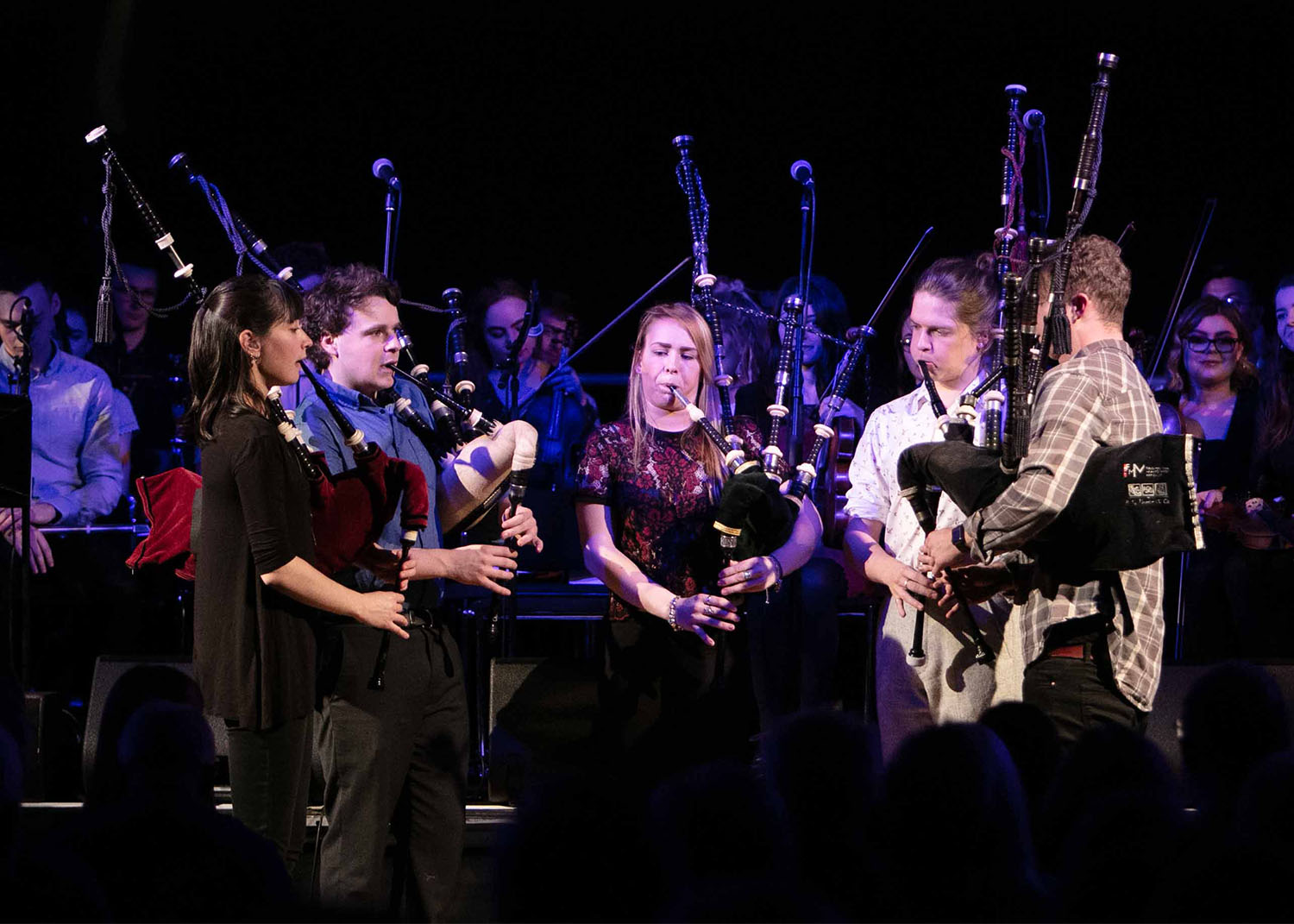
Thinking about studying piping at the degree level in 2027? Join John Mulhearn who is Head of Piping Studies, NPC, and Josh Dickson, Head of Traditional Music, RCS, for a live online session tomorrow, September 15, 2026 on the BMus Traditional Music (Piping) degree.
Whether you’re aiming for the upcoming October 1 deadline or planning ahead for future years, come along to ask about audition preparation, course structure and student life.
The session runs from 19:30 – 20:30 online via MS Teams. You can join the meeting directly: https://teams.live.com/meet/9329991651604…

This is the UK’s only Bachelor of Music curriculum dedicated to traditional and folk music, and to the music of the Scottish Highland Bagpipe. Aspiring performers on this course explore Scotland’s unique and dynamic musical traditions as a conceptual, critical and creative framework within which to achieve a historically informed yet distinctively personal voice as a piper and artist. This is interwoven with a solid basis in contemporary and eclectic performance practice.
The Royal Conservatoire of Scotland and The National Piping Centre offer a specialist degree that allows pipers to study piping within the context of Scottish traditional music to the highest level. This unique course offers the chance for students to concentrate on the total study of piping in all forms, whilst also developing their performance skills under some of the best players in the world. Students receive instruction individually and in small groups and workshop settings. The degree includes substantial study of the history, repertoire, traditions, performance practice and organology of the bagpipes, producing expert performers with a deep understanding of their own, and other, traditions.
The nature of the Highland bagpipe and its repertoire, defined by highly individual and highly complex parameters of performance and musical structure, demands a teaching approach which integrates the instrument with the rest of Scottish traditional music while simultaneously respecting its uniqueness. The piping degree is therefore carefully structured to give the most thorough grounding possible in vital specialisms such as solo piping, piobaireachd, light music, and piping in a folk ensemble context, whilst sharing the same structure and range of contextual curriculum as in the main Traditional Music department.
The two programmes share an immense amount of common ground and the institutional emphasis is always on co-operation.