

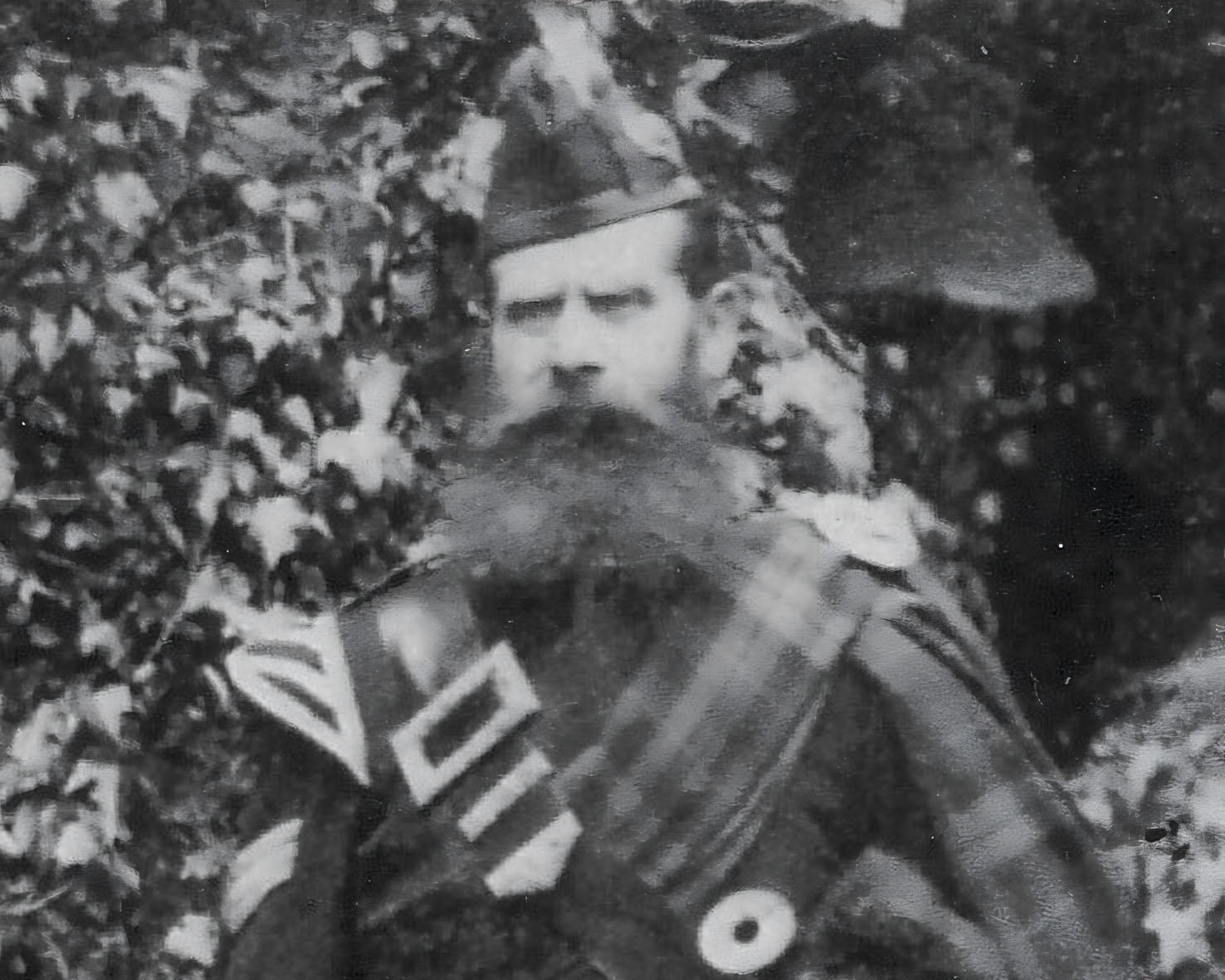
Continuing the series of substantial research articles by Jeannie Campbell MBE, focusing on piping and pipers in Dundee in the 1800s. A link to part 1 is here.
• PART 2 •
BY JEANNIE CAMPBELL MBE.

The Dundee Perth and Cupar Advertiser featured several poems and songs by John Cameron. One printed on the 16th February 1858 was entitled ‘The Leys of Luncarty’ and could be sung to the air ‘Braes of Tullymet.’ The introduction is of interest. This reads as follows; ‘By particular desire of a number of the members of the Perth Highland Society, and of the Dundee Highland Association, we have been requested to publish the following spirited song of John Cameron Piper to Lord Douglas, Guard and Piper and Warden to the Highland Association, Dundee, whose bagpipe making and Highland poetry have made him so well and widely known. The song is dedicated to the noblemen, gentlemen, and members generally connected with the Highland Friendly Societies, and was sung by the author at the meeting of the Society held in Perth on the occasion of the Queen’s visit to Scone Palace.’
On 14th August 1858 papers announced, ‘Dundee Highland Gathering. The Duke of Athole has intimated his intention of being present at the Highland Gathering in the Barrack Park, Dundee, on the 26th inst, with 70 of his Athole Highlanders. His band is also to be in attendance.’ No report of this gathering has been found.
John Cameron died in June 1859. The Dundee, Perth, Forfar and Fife People’s Journal of 18th June 1859 carried the following report, ‘Body Found. One day about the beginning of this week, John Cameron, piper to the Dundee Highland Society, left his home after taking an unusually affectionate farewell of his family. He had been in low spirits for some time previous. For some days nothing was heard of him, and he did not return home again. Much doubt and anxiety was felt regarding him, which was mournfully dissipated yesterday by the discovery of his body, quite lifeless, in a pond near Carnoustie, whither it is supposed he had wandered. He was considerably advanced in years, and was well known and much respected in Dundee.’ The cause of death was given as Suicide by Drowning. Another report stated, ‘Suspected suicide of the “Piper of Dundee”. On Wednesday the body of John Cameron, better known as the “Dundee Piper,” was discovered near Carnoustie by some passersby. Cameron had been for some time slightly deranged, and was also drinking too freely. He was found with his head in a small pool of water, his coat and vest being hung on a stick stuck in the ground at his side. He was a “character” in Dundee, and an enthusiastic player on, as well as a maker of bagpipes. John was piper of Lord Douglas’ Guard to the Dundee Highland Society, and annually performed on the first day of the fair. His father was a Lochaber man, a piper in a regiment, and served with Sir Ralph Abercromby in Egypt.’
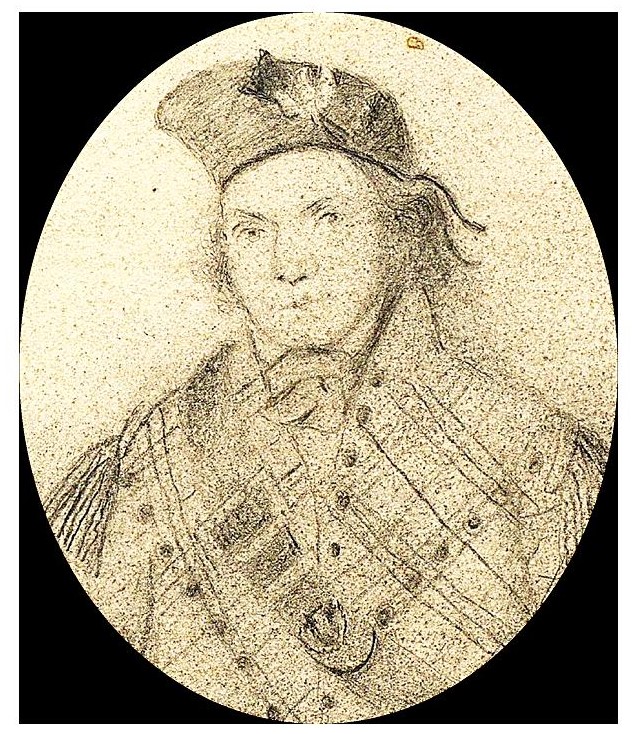
Although John Cameron had died in 1859 his name was included as an official of the association until 1862 but it is possible that his son John continued with the duties of piper to the Association. After John’s death the Association organised a concert to raise money for his widow. On 12th November 1859 the Dundee, Perth, Forfar and Fife People’s Journal had this report. ‘Concert. A concert under the patronage of the Dundee Highland Association was given on Monday in Bell Street Hall, for behoof of the widow of the late John Cameron, who was piper and warden to that body. The hall was crowded, and the proceedings consisted of singing, dancing, and bagpipe playing – all of which seemed to give the utmost satisfaction to the large though somewhat unruly audience. Where all were so favourably received, it were invidious to particularize, yet we must notice Miss Isa Anderson as deserving of praise. She has a very good voice, and sung her several songs with no little taste, for which she was encored as she deserved. We hope to hear of a good sum being left for the benefit of the widow.’ The concert was perhaps not as successful as had been hoped as this appeared in the Dundee, Perth, Forfar and Fife People’s Journal on 3rd December, ‘“A Highlander” thinks that the Concert on behalf the widow of the late John Cameron should have yielded several pounds more for her benefit. We cannot publish his letter, as it reflects on the integrity of the managers, who, no doubt, can fully explain everything connected with the receipts and disbursements of the Concert.’
The 1859 Gathering was advertised as follows on 23rd August, ‘Dundee Highland Association. Annual Games in the Barrack Park on the 28th curt. The Fair Day as usual. For particulars see Programme.’
At this fourth Gathering the first prize for Piobaireachd went to MacGregor from Aberfeldy and second to John Gray from Aberdeen. In the Reels Duncan Campbell piper to the Marquis of Breadalbane was first and John Gray second. The report mentioned the theft of a gold watch and chain from the person of a gentleman present at the Games. The guilty party had made his escape before the owner discovered his loss, and had not yet been captured.
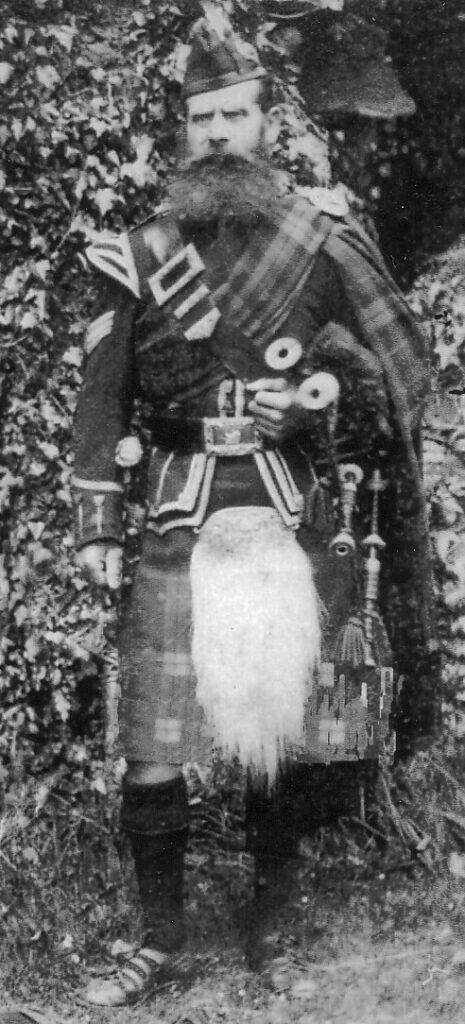
•Duncan Campbell was born at Kinnoull in Perthshire in 1840. He enlisted in the 79th Queen’s Own Cameron Highlanders in 1858 and was Pipe Major 1877 to 1880 when he retired and became Piper to the Marquis of Breadalbane and Custodian of Finlarig Castle at Killin. He served with the 2nd Perthshire Rifle Volunteers from 1881 to 1887 and then the Killin Company 5th Volunteer Battalion, Black Watch from 1887 until 1901. By 1883 Duncan was Pipe Sergeant of the Breadalbane Pipe Band under PM Duncan MacDougall. He died at Aberfeldy in 1924.
No reports have been found for a gathering in 1860 and as the 1861 Gathering was described as the fifth it is likely that no gathering was held in 1860.
The 1861 gathering was held earlier than in previous years, on Saturday 29th June and was reported in the Dundee Advertiser on Monday 1st July, ‘Our Highlanders this year seem to have found special favour with the clerk of the weather, for their fifth annual gathering came off in the Barrack Park on Saturday afternoon, under the most favourable circumstances. The day, and especially the afternoon, was one of the finest of the season, and the result was an immense turn-out of the Dundonians. And not of them only, but there was a fair sprinkling of “lads and lasses” and staring country folks, who had come into town to witness the harmless diversions of the (presumed) descendants of the bare-legged caterans, whose “gatherings” were not quite so diverting to their forefathers in former days, and whose levies of “blackmail” were not taken so quietly or genteelly as are those of their successors, at the doors of a public park, although we will not dispute that the one may be perhaps as effective as the other.
‘The hour fixed for the commencement of the games was two o’clock, and accordingly shortly before that time the members of the Highland Association (mostly in the uniform of the Dundee Highland Volunteers) together with the intending competitors (all in Highland garb), assembled in the Thistle Hall in Union Street, when the last of the competitors’ names were entered by the secretary Mr D Robertson, and final arrangements made. The whole of the members and competitors then formed in procession (Under Captain Guild of the D H V R), and marched along Nethergate, High Street, and Constitution Road to the Park. The procession was headed by several pipers, whose piercing notes soon lined the intended route with spectators, and the smart and manly appearance of the company excited general admiration.. Among many of the onlookers, however, including, of course, the juveniles, a vague notion that the members of the procession “were all going to dance” seemed to prevail, mingled with a sentiment of half-indignant regret that they would not commence at once.
‘On arriving at the Park, they immediately proceeded to the west end, where a grandstand, with wings, capable of accommodating about 600 spectators, had been erected, and an arena of about 100 yards in length, and about 80 in breadth, had been railed off in front. The central portion of the stand was covered in, and it was decorated in the usual manner with flags and evergreens, the benches being covered with scarlet cloth, and, as the time wore on, it gradually filled up with a numerous assemblage of ladies and gentlemen. At this time , and at intervals during the day’s proceedings, the Firth of Tay Volunteer Artillery Band, under the leadership of Mr Wallace, played some excellent music, which formed a gratifying contrast to the shrill notes of their brawny musical brethren, the pipers.
‘The games did not commence until nearly three o’clock, at which time there might be about four thousand persons in the Park, but this number kept constantly increasing, till at the close there must have been seven or eight thousand spectators. And out of the park as well as in it every point of vantage was seized, for all along the north wall was seen a thick border of human heads, the possessors of which, not having a sixpence to spare, or not choosing to spend it if they had, were thus condemned to look on from a distance. To the north of the Park, three or four villas at present building were taken forcible possession of by the more enterprising and unscrupulous of the sixpenceless spectators, and in a short time the vacant window holes were crowded with gazers, and on the tops of the walls, and even on the roof and chimneys of one, were to be seen clusters of determined sight-seers, the legs of the more unconcerned dangling over the window sills and walls. In the Park itself, the anxiety to get a good place was uncomfortably obvious, and at the edge of the arena the pushing and struggling of the crowd, with the occasional dashes of a policeman right in amongst them, kept alive the interest till the games commenced. A number of policemen were scattered through the Park, and at the gates, to preserve order, and keep the arena clear, but when the games commenced the space for the competitors was rapidly encroached upon by the multitude who continued to make good their advance during the whole of the proceedings, notwithstanding the exertions of policemen Highlanders to keep them back. At length, everything was got ready, and the business of the programme commenced.’
The piping, dancing and athletics took place, and the results were given. For piping the results were, For Pibrochs, 1st Gilbert Gordon, Edinburgh, £3; 2nd Angus McLeod, 79th Highlanders, Stirling, £2. Playing Highland Reels, 1st Gilbert Gordon, Edinburgh, a handsome silver medal and 10s 6d; 2nd Angus McLeod, Stirling, £1.
After this, in preparation for the races part of the arena fence was removed, ‘but by this time the crowd had increased to such a degree that to find requisite space was almost impossible. Hundreds of lads leapt the north wall of the Park, and scampered towards the scene of the games, in utter defiance of two or three indignant policemen, even although their exertions were stoutly supplemented by those of the Highlanders, one stalwart fellow in particular seizing two luckless imps by a certain part of their unmentionables and carrying one in each hand carelessly towards the gate. It was found in vain, however, to keep back the crowd, and at last the gates were left unguarded, when the rush was tremendous. They ranged themselves along the line of racers somewhere about 500 yards and formed quite an avenue along which the racers ran. All sorts of expedients were tried to frighten the mob back, here a Highlander might be seen wildly flourishing his musket, with a make-believe intention of doing for someone, and there might be observed two policemen, one at each end of a long plank, advancing in line for the purpose of pressing the crowd back, a very ingenious expedient, though unfortunately unsuccessful. All efforts to keep back the crowd were found utterly impossible, and as the grandstand emptied of its occupants hundreds pressed forward on it to secure a favourable view of the distribution of the prizes until every available inch of standing room was occupied.
‘At this stage an accident occurred which might have been productive of the most fatal consequences, but which fortunately did no one serious injury. As the mob on the stand continued surging and struggling, each striving to mount higher than his neighbour, the top bench of the erection was observed to yield, and in a moment fell with a tremendous crash, carrying all the lower benches with it, and precipitating the screaming spectators to a depth of some 16 feet. The accident caused intense excitement, and several of the crowd instantly proceeded to extricate the unfortunate sight-seers, who had thus suddenly come to grief. When it was found that all had escaped unhurt, except one poor woman, named Isabella Lamb, residing in Shaw’s Land, Lochee Road, who had fainted as much from fright as from injury. She was carried to the infirmary by two or three men, and in a short time afterwards was so far recovered as to be able to walk home. As the platform was felt giving way, the sharp crack of the breaking planks was heard, all eyes were at once turned to the shrieking and terror-struck occupants of the benches, who were observed to sink helplessly among the broken timber; and at first, from the serious appearance of the accident, it seemed incredible that no-one was injured, many people in fact, imagining that two or three must have been killed. No blame can be attached to the wright who erected the stand, which was quite sufficient to resist any ordinary strain, but of course could not be expected to sustain some hundreds more than it was designed to do. Immediately after this untoward occurrence, as the crowd showed no sign of dispersing, the Committee and the successful competitors, with a motley following, adjourned to Ensign Ballingall’s business premises, near the Park, where the prizes were distributed, and hearty votes of thanks were passed to President Guild, Vice President Ballingall, Secretary Robertson, and the Committee.
‘In the course of the day several “scenes” took place in various quarters of the ground, chiefly caused by attempts to break into the park, and there seemed to be a gathering of others quite as far north as true-born Highlanders, for we have heard of one instance where a young man, who had cast off his coat and necktie, found on going to resume them that his necktie had disappeared, and along with it a snuffbox from his coat pocket, and his purse containg 12s. No clue to the thief could be found.
‘A refreshment tent, which was pitched nearby the stand, belonging to Mr Smith of the Restaurant, was besieged by crowds of thirsty souls during the afternoon, and some idea of their “drouth” may be formed when we state that in a few hours above upwards of 1,750 pints of porter and ales were disposed of, and that a donkey cart had to keep going to forage for further supplies. It is pleasing to record that though there was such a large sale of these liquors, there was scarcely any drunkenness observed.
‘Altogether, the games this year have been far more successful than any of those of former years, both as regards the number of spectators and competitors, of whom there was one-fourth more entered than on any previous occasion, and although neither the Duke of Athole nor the Edinburgh deputation appeared, owing to the recent occurrence of the Stirling ceremonial, there seemed to be no lack of interest evinced in consequence. One element of their success has undoubtedly been the early period at which the games have been held, which appears to be an improvement upon the practice of former years, as in August the days are short and the evenings chilly, which, with other unpleasant concomitants, tend to the discomfort of the spectators. Formerly, too, the Fair Day was considered to be the most suitable, but this idea is now shown to be unfounded, by the fact that the celebration on Saturday was such a complete success.
Afterwards this appeared in the paper as part of a council report, ‘Damage done to walls of the Barrack Park. The Clerk stated that, when the use of the Barrack Park was granted to the Dundee Highland Association for their Games, Captain Guild, for the Association, came under an obligation to repair any damage that might be done to the Park, or to the walls. He understood the north wall had been very much injured; it might, indeed, cost some £15 to repair it.’
In 1862 the Games took place at Rollo’s Pier, Magdalen Yard Road on Saturday 9th August and were reported as follows. ‘The day was one of the finest which we have had for a considerable time and it was a matter of regret that the competition ground was so shabbily attended by the Dundee sight-seers; but perhaps the out of the way locality had something to do with the attendance. The space set apart for the games was in the lower part of the green, above which the ground rises to a considerable extent, and which formed as excellent standpoint for a view of the competitions.’
The judges for all the events were Captain Guild, Ensign Ballingall, Mr W Meldrum, Perth and Mr John McFarlane, Dundee. The piping results were, ‘Playing Highland Marches on the Great Highland Bagpipe: 1. James Stewart, the Earl of Dunmore’s piper, medal; 2. John Coutts piper 10th FHVR, 5s. Seven competed. Playing Highland Reels on the Great Highland Bagpipe: 1. James Stewart, the Earl of Dunmore’s piper, 10s; 2. W F Forbes, 5s. Six competed. Best dressed Highlander: 1. James Stewart, the Earl of Dunmore’s piper, 10s; 2. George McKenzie 14th FHVR, 5s. Three competed. An extra prize, a handsome set of miniature Highland bagpipes, mounted with silver, was presented to the Association by Mr John Thow, bagpipe maker, Seagate, to be competed for by pipers belonging to Dundee. Four competed. The successful competitor was John Coutts, piper 10th FHVR, and James Speed, Dundee, second prize, 2s.6d.
‘On the whole the games passed off very successfully, when it is taken into account that they were intended to be only of a local character. The proceedings of Saturday were well fitted to invite further efforts on the part of our local athletes, and that, perhaps, by next year we may have a grand display, equal to, if not exceeding, any one of former years, in the Barrack Park.’
•John Thow was born at Fettercairn, Kincardineshire in 1813 the son of James Thow and Agnes Hendry. From 1850 to 1853 John Thow was listed as a Wright at 88 Seagate. He can be found there in the 1851 census. He was described then as a Wright, aged 38, his wife Ann Galloway was 46 and they had children Agnes 12, James 10, David 9, Robert 6 and Ann 3. In 1853 his directory entry changed to John Thow, Turner and Toolmaker. In the 1861-62 directory the entry changed to John Thow, Turner and Bagpipe Maker 96 Seagate. It is possible that Thow took over Cameron’s business or had learned pipe making from him as Thow’s pipes have similarities to Cameron’s. John Thow died in Dundee in 1879 aged 66 from pneumonia. The informant was his son David. On 21st August 1879 the Dundee Courier reported the sad news, ‘Death of Mr John Thow. Many of our readers will regret to learn that Mr John Thow, the well-known turner and bagpipe-maker in Seagate, died yesterday afternoon, after a few days’ illness. Mr Thow came to Dundee from Fettercairn about forty years ago, and since then has carried on business as a musical instrument maker, turner, and stamp cutter. His workmanship was of a very superior description, and characterised by considerable ingenuity. As a devoted adherent of the temperance cause, he took an active interest in the formation of the late Dundee Band of Hope, and organised, taught and led the flute and brass bands of that body. He was an exemplary member of the U P Church (United Presbyterian), and had been for some years an elder of School Wynd congregation. His wife and family have all predeceased him, with the exception of his son David, who has been long associated with him in business.’