

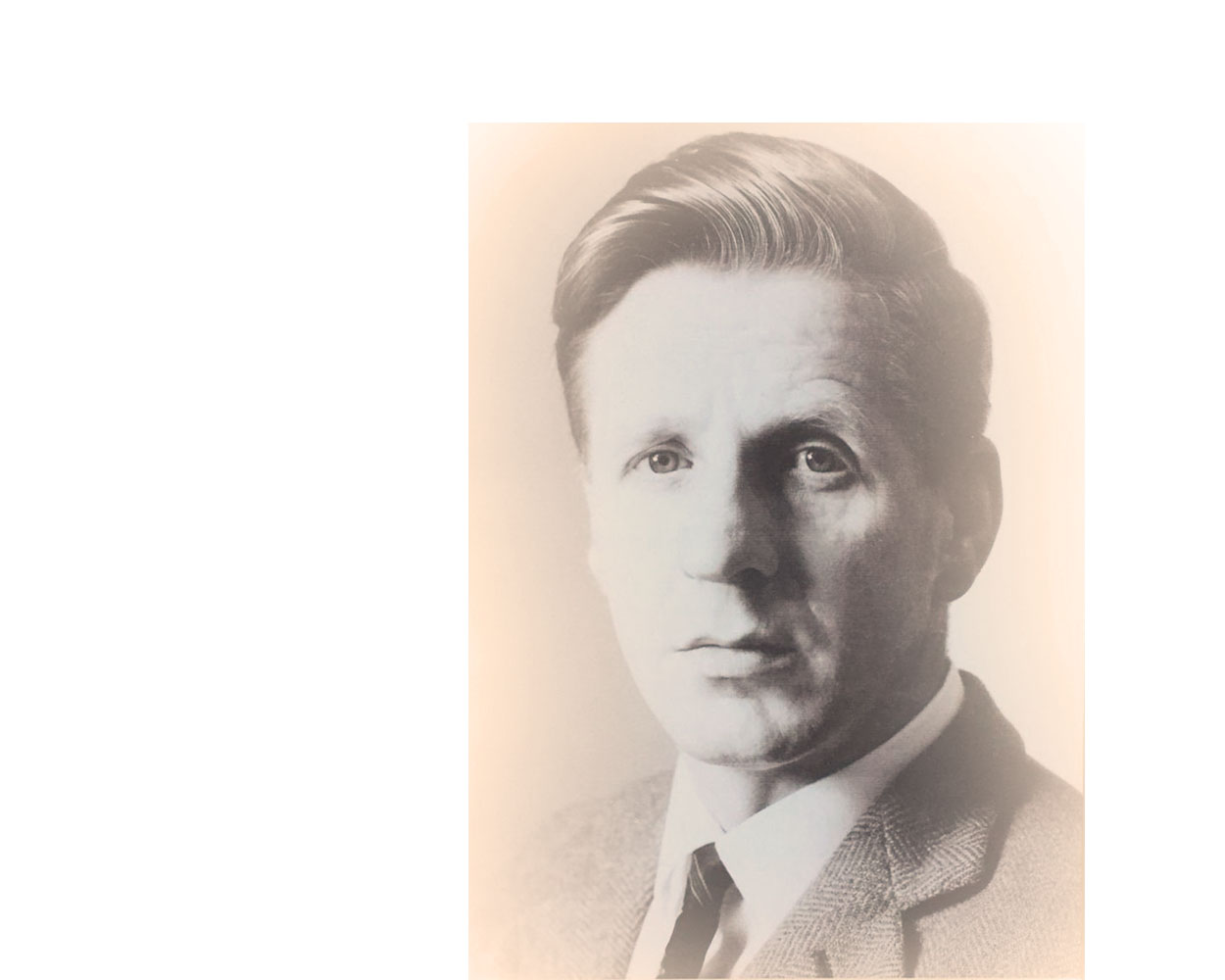
Dugald Brown MacNeill was born in 1930, the fifth of six children to parents who lived in Ardrishaig in Argyll. He spent the first ten years or so in Ardrishaig, going to primary school in Lochgilphead. In 1941 the family moved to Glasgow where he went to Hyndland School.
Although he yearned to take up the bagpipes while in Argyll he had no luck in finding a suitable tutor. After a while in Glasgow, however, he heard about Fianna na h’Alba (the League of Young Scots) which met in a basement flat in Pitt Street, Glasgow. This group had started life as a nationalist youth organisation but by then had largely become a piping class. In the autumn of 1943, on the cusp of turning 13, Dugald became their youngest pupil. And so began Dugald’s 70 year involvement with what, a year later, would become the College of Piping. He was soon joined by other young people of various ages and stages including Kenneth MacLean, Finlay MacNeill and Ronald Lawrie. At that time the founders and Joint Principals of the College, Seumas MacNeill and Tommy Pearston were the only tutors and from them Dugald learnt his piping and particularly his strong finger technique. He moved on to get instruction from (Wee) Donald MacLean who also taught at the College in the early years.
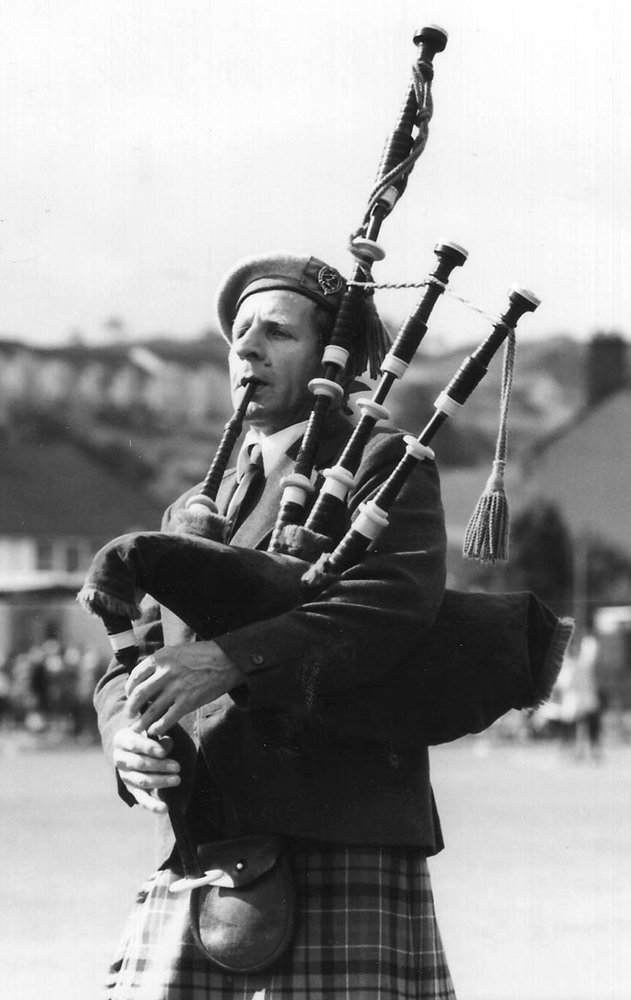
Dugald went to Glasgow University to study Chemistry, where one of his lecturers happened also to be his piping teacher, Seumas MacNeill. He remained with the College of Piping, moving on to be an instructor while developing his own playing at a time when Glasgow was fast establishing itself as the undoubted centre of the piping world. After two years’ National Service in the Royal Signals, mostly spent in Paris at NATO headquarters, he returned to Glasgow and took up a job in the laboratory with Colvilles Limited, an iron and steel producer, later to be nationalised as part of British Steel. In the laboratory he met a colleague, Helen, who would become his wife. He moved into management and, as well as being involved in the establishment of Ravenscraig steelworks, he became manager of both Clyde Iron Works and Clyde Bridge Steelworks, before both those plants closed in the late 1970s.
During the 1960s and 1970s Dugald taught regularly at the College and was one of the three main teachers at the popular Thursday night class, along with Tommy Pearston and Kenneth MacLean. Dugald always wore a kilt and that is how his many pupils will remember him. He was a regular solo competitor round the games during this time, notably winning the Open March (and the Royal Scottish Pipers’ Society Silver Star) at the Argyllshire Gathering in 1973.
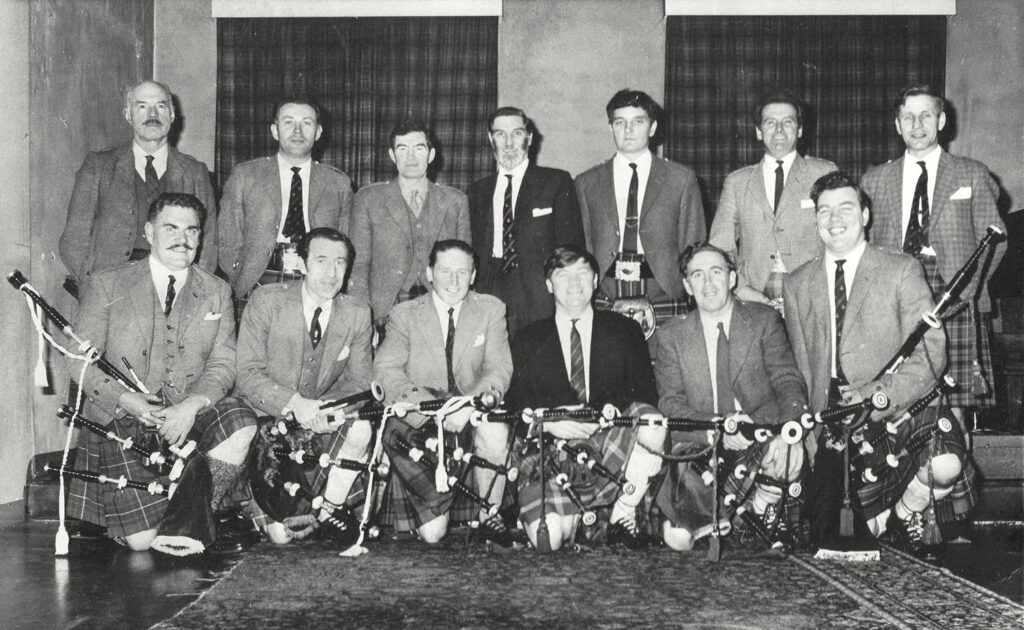
He moved to Edinburgh in 1979, taking up a job with British Aluminium, based in Burntisland, Fife, where he would remain working, with regular trips each year to Ghana to visit a bauxite mine (from which aluminium ore is obtained) until his retirement in 1994. From 1979 until 2017 he held a Monday night class in Edinburgh, where many beginners began their journey to the pipes.

Retirement from his working career meant that Dugald could devote more time to piping. Dugald became Principal of the College of Piping in 1996, when Seumas MacNeill died. He carried out that role, along with editing the Piping Times each month, for three years until 1999, when it became viable, for the first time in its then 50 year existence, to employ a Principal. Robert Wallace became Principal and editor of the Piping Times, and Dugald became Chairman, a position he held until 2017.
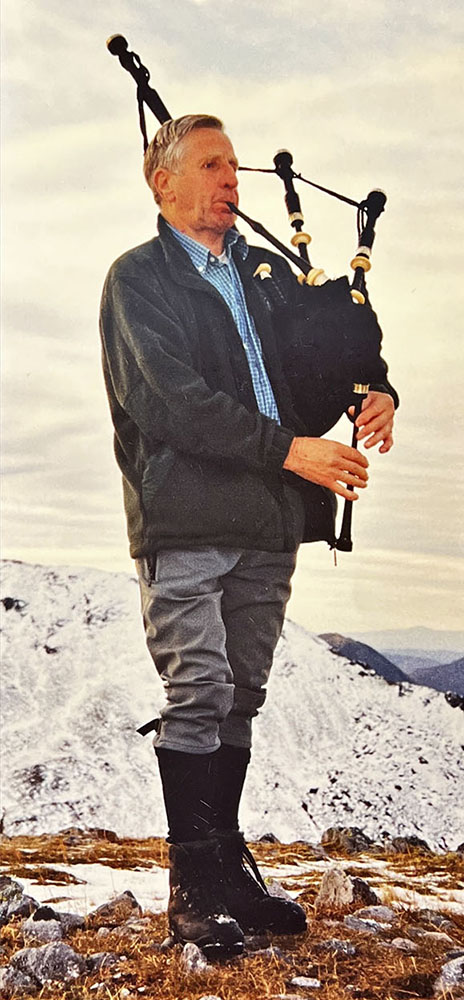
Retirement also allowed Dugald to spend more time climbing hills, something he’d been doing since he was a boy. He completed all the Munros in 2003, when he was 73 and then went on to climb Mount Kilimanjaro, the highest peak in Africa, in 2011, aged 80.
Dugald was passionate about making piping available to anyone who wanted to learn, particularly piobaireachd. He published Sight Readable Ceol Mor, a collection of well known piobaireachd written in what Dugald believed was a more accurate representation of how the music was best played. Dugald also published Essential Tunes books 1 and 2 with CDs of all the tunes. He was Secretary of the Piobaireachd Society for many years and also instituted a regular group in Edinburgh, which continues to this day, called Piobaireachd for Pleasure, open to anyone who wanted to listen to, and themselves play, piobaireachd.

His wife Helen died in 2017 and not long after that Dugald began a slow decline into dementia. The cruelty of that disease, and the wonders of the human brain, are such that long after Dugald could maintain a lucid conversation, he was still able to play tunes on the chanter, with his ever characteristic strong finger technique to the fore. He died, aged 95, on 11 June 2026.
Generous with his time, advice and service over a lifetime, Dugald was universally respected and liked in the piping world. He is survived by his three children, Helen, Roderick and Colin (also a piper, and trustee of the National Piping Centre).